On January 28th, 2026, the Ohio Arts Council awarded 77 Ohio artists with Individual Excellence Awards
The official announcement arrived during a week when it felt as if the forces of evil had taken hold of our country. Perhaps they have, at least in part. It’s difficult to celebrate artistic achievement when American protestors are being murdered in the street by representatives of the federal government. It’s difficult to feel joy when immigrants, many of them far along in the legal naturalization process, and some of them young children, are being violently snatched off the streets and imprisoned. But it’s important to create art, especially in these times, and it’s equally vital for artists to seek financial support for their work.
I learned I would receive an award for Individual Excellence in Poetry, joining a group of poets, fiction and non-fiction writers, critics, composers, and choreographers. I’m grateful to the Ohio Arts Council for this award and to the Ohio Legislature behind them. At a time when so much artistic funding has been cut or eliminated, it’s refreshing to discover that the political will still exists to fund artists, at least at the state level. Thank you, Ohio, for believing in art!
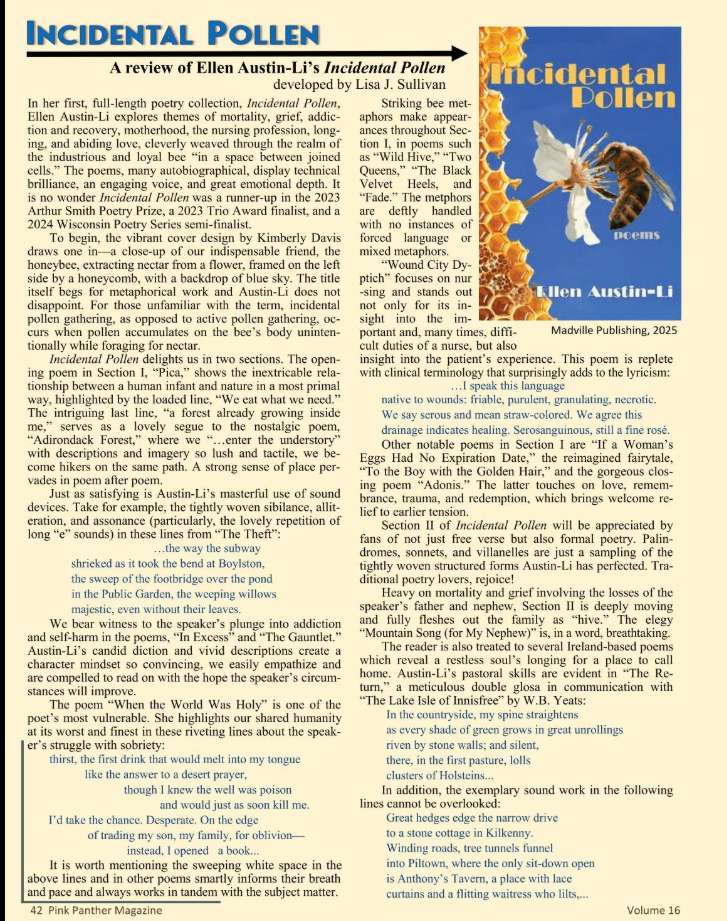
I’ve neglected posting blog entries for many months (a mixture of grief and the state of the country) and was certainly remiss in not sharing this book review, written by poet and artist Lisa Sullivan, when the March 2025 issue of Pink Panther Magazine went to print. I posted the link to Pink Panther Magazine on the home page, as this is a publication worth purchasing. The visual art is every bit as arresting as the poetry and prose found on the pages. It truly is a beautiful product! I hope you’ll take a look at Mag Cloud, where the ordering and digital copy reside (this is where Pink Panther‘s webpage will lead you).
Many thanks to Editor-in-Chief Jen DeBellis for giving this review space in this gorgeous journal.
In a year of extremes, the deepest losses and the sweetest touches, I am here, my eyes open every morning (against my wishes) clear blue until the dark
sky moves in—the rain swift as a summer storm, turbulent air, and broken hair in high winds—just as suddenly, the weather passes and the statues of all I have lost stand
in the clearing: my sister and brother in the next world, the beautiful words we chiseled at the end of their lives; and I remember how love once looked like eyes
from across a crowded room, and my first- born son will soon join hands with his own beloved, and there is another first—my book of poems to usher in this spring, after some
cold has passed—the work that circles grief, even as I see (perhaps) at last, this journey is all about weather, weathering the weather—warmth and the worst of it—in varying measures.
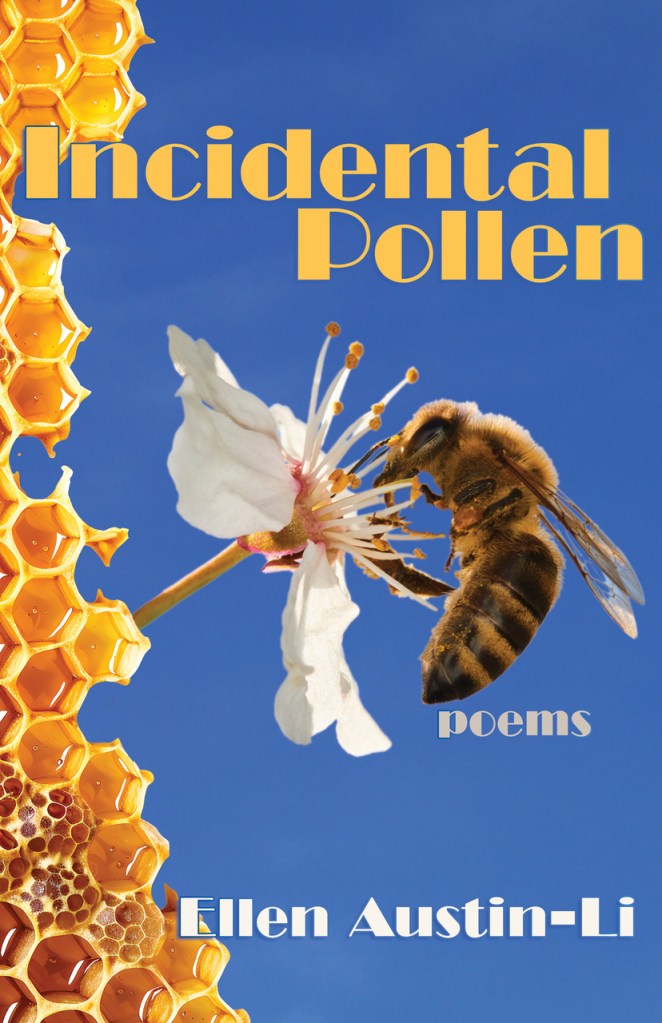
The day has finally arrived: December 1st. Pre-sales are open for my first full-length poetry collection from Madville Publishing, Incidental Pollen. Sometimes, the universe gives us pain, and sometimes, beauty. I’m grateful this first book landed with Madville as the runner-up to the Arthur Smith Poetry Prize and that I received this good news at the beginning of a very painful year. I’ve lost two central people in my life this past year; someday, I’ll be able to write fully about these losses, but not yet. Today, I’m here to celebrate the collection dedicated to my father, my nephew, Jeffery, and my sister, Mary.
RUNNER-UP FOR THE 2023 ARTHUR SMITH POETRY PRIZE

Incidental pollen refers to pollen that collects on bees as they forage for nectar—like the cumulative life experiences we cannot help but carry. The hive serves as a thematic thread in this collection that explores the space between past and present, shame and redemption, grief and resilience. Poetic forms lend meaning—like the villanelle that captures the grief-driven magical thinking of the speaker. Are recurring red fox sightings visitations from her deceased father and nephew? Trauma and loss appear in these tonally rich and imagistic poems, but the arc ultimately centers on the search for belonging, the attempt to recreate home.
I am most grateful to Madville Publishing’s founding director, Kim Davis, and poetry editor extraordinaire, Linda Parsons, for creating such a stunning final product. If you order Incidental Pollen, I hope it moves you and speaks to you. These poems were many years in the making.
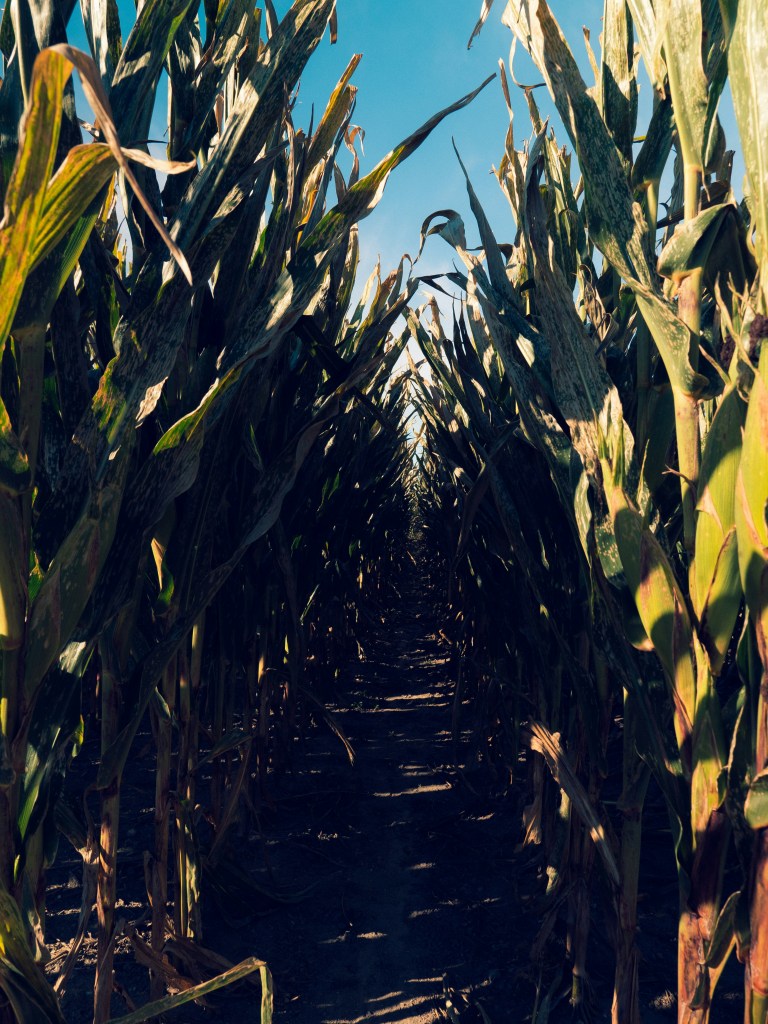
Racing down the alley of August, I slow as I am alone among the rows, hidden in our game of hide-n-seek on Nana’s farm. Timeless summer. The stalks rustle and the breeze kisses my bare arms, fine hairs lift as my body cools. Silence as the in-between stillness settles. There, a monarch, russet and black-rimmed, lands. I swear I hear its wings flutter. Cicadas crescendo when the sun burns between cloud cover. I hear one of my brothers or sisters’ footfalls nearby, then retreating. Hush‒‒ the wind rushes around me. I will stay forever.
I’m announcing that my first full-length poetry collection, Incidental Pollen—2023 Trio Award finalist, 2024 Wisconsin Poetry Series semi-finalist, and 2023 Arthur Smith Poetry Prize runner-up—is forthcoming from Madville Publishing in May 2025. I’m astonished and grateful to the contest poetry readers (Joshua Rogers & Darius Stewart) and contest judge Marilyn Kallet (Poet Laureate Emeritus of Knoxville, TN) for recognizing my manuscript in this way. I am also thrilled to work with a women-led press (Founding Director Kim Davis and Poetry Editor Linda Parsons). Mostly, though, I’m grateful to bring this particular collection of poems dedicated to my father and nephew into the world.
Announcements have this nagging way of showing you how absent you have been from certain spaces. My intention to post a new blog entry every month has clearly fallen away. I have been hiding in these corn rows, brought back to those early years, as I navigate some difficult emotional territory. The formative years live so deeply in me that sometimes I believe I am back there, with all the people I love most in the world—especially my brothers and sisters—nearby. I know they’re there. I may not be able to see them, but I hear them so close I believe I can touch them. These moments are the most important to me. Composing poems is the closest I can come to capturing the ephemeral —sharing the sacred so I can fix it in time and space—and perhaps touch someone else at the same time.
My family of origin lost our brilliant and gentle father in December 2017. At age 93, his death was expected and (thankfully) peaceful. Just three weeks later, we suddenly lost my talented and equally gentle nephew, Jeffery Cox—my sister’s son—under traumatic circumstances. These losses feel like a lifetime ago to me (I’m sure my experience of loss is different from others in the family), but they weren’t. In many ways, these first significant losses had an outsized impact on all of us. I’ve been carrying these poems around for several years; it’s finally time to let them go into the world with the dedication page that’s been fixed in place since the book’s inception.
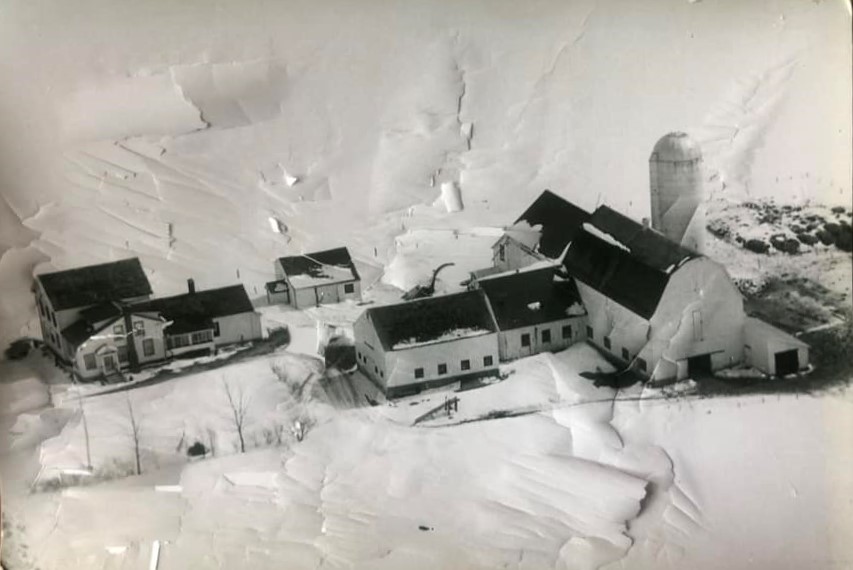
Nana’s farm, Fabius, N.Y. (photo provided by cousin Dan Dwyer)
Ireland (Fabius, N.Y.)

Tucked between pastures on Nana’s farm,
riddled with ravines, tangled trees, crisscrossed
creeks: a wild place. We hiked open fields to enter
the woods—in full leaf, sunlight changed
to dusk when we passed over the threshold.
We called it Ireland, as generations had before,
named for the hungry, rocky place left behind.

How long before their clearing and plowing
brought them to the edge of this green place?
Was there something in the cut of the hill,
or the way the breeze lifted their hair, licked
the leaves, or was it the smell of sweet grass
that gave them glimpses of an older place
across the sea?

We inherited the longing for home
without being told—the way Ireland
was whispered with cloudy blue
far-away eyes, shoulders shrugged,
at times a passing sigh. Inside
the trees we claimed our tributaries
from fairies, climbed mossy rocks,
believed we were transported afar.

Back in school one Monday, a nun asked
our younger brother to write what he had done
over the weekend. We went to Ireland,
he inked. We just got back.

*published in Verse Virtual, April 2023
https://www.verse-virtual.org/2023/April/austin-li-ellen-2023-april.html
About Ireland
Even though I wrote the gist of this poem several years ago during a day-long writing retreat on the Ohio River, it was just recently curated on Verse Virtual (thank you to editor Jim Lewis and all of the guest editors at VV). It’s not like I’ve tried many times to get this piece out into the world. I’ve been holding back, hoping to find the right journal. And speaking of holding back, how is it possible that I last posted a year ago? I suppose I needed to settle into a different writer’s space long enough to compose a blog post. I’m still not settled, but I’m starting to move in a new direction.
I graduated with my MFA in Poetry last year (thank you, Solstice MFA in Creative Writing, now at Lasell University). Since graduation, I’ve spent the past twelve+ months joining new writing groups (Greater Cincinnati Writers League and Cincinnati Writers Project), continuing with other long-standing gatherings (an informal group of women writers who first met at Women Writing for a Change, and “The Writer’s Table,” a generative workshop led by Sherry Cook Stanforth and Richard Hague, both legendary local Appalachian writers) and even starting a new generative writing group. I’m also participating in Pauletta Hansel’s “Draft to Craft” seminar-style writing series. All of this is to find a new way forward, a new literary home—this home made of many pieces.
No surprise that the poetry manuscript I shaped during my time at Solstice centers around finding a home and creating a sense of belonging. And the current state of this collection? You guessed it: I hope these poems land in the right home this year. This riff brings me back to “Ireland (Fabius, N.Y.).” Even though this poem may lead you to believe I’ve written about a mythical place, this Ireland exists—at least in the hearts of my extended family—in Fabius, N.Y., a rural area east of Syracuse. My mother was raised in a large Irish Catholic family, with ten children, including Mom, on a dairy farm. By the time her generation married, dispersed (except for two brothers), and had children, this wild area—accessed by crossing fields and sometimes, at least once that I recall, being chased by a bull—was a magical place where we played. The “we” being me and my five siblings and various combinations of our thirty-six Dwyer cousins. We all logged time exploring in the trees, the ravines, and the creek(s) in “Ireland.”
When I shared this poem publicly, some cousins wondered who named this patch of land “Ireland.” In the writing of this poem, the answer to that question didn’t matter. It’s the longing for one’s true home I wanted to access. My Irish ancestors fled Ireland during the Irish Potato Famine in the 1840s (or The Great Hunger), an immigration forced by starvation and desperation. An ugly and complicated removal that separated families and, I would argue, left a trail of silence in the wake of trauma. A reverence remains for a place one loves but must leave. My family set aside a corner of land to honor the home country (“the old sod,” my mother says). A place of joy, not grief. I will ask my mother—at 96, the last of her generation—if she remembers how “Ireland” was named and who did the naming. The farm, sadly, is no longer in the family. But that wild area, Ireland, still lives. At least in our collective imagination.
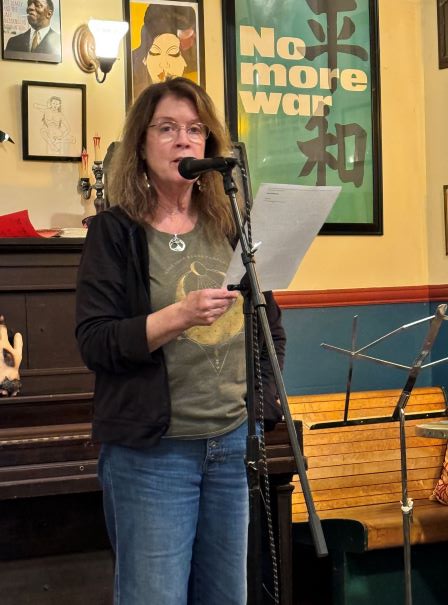
And a note on the home across the sea—I recently read this poem at a poetry series I co-founded in Cincinnati, “Poetry Night at Sitwell’s” (another attempt at belonging), and shared with the crowd how the Irish revere poetry. Poetry Day Ireland (April 27th in ’23) is an island-wide celebration. Their poets even get tax breaks! And a poet I studied under at Iowa’s Summer Writing Festival, Jude Nutter (who lives in Ireland every summer), says every Irish person you stop on the street can recite Yeats and Seamus Heaney as a matter of course. The Irish genuinely love their poets. Someday, I hope to study there, even if just for a brief time. The ever-present pull to go home.
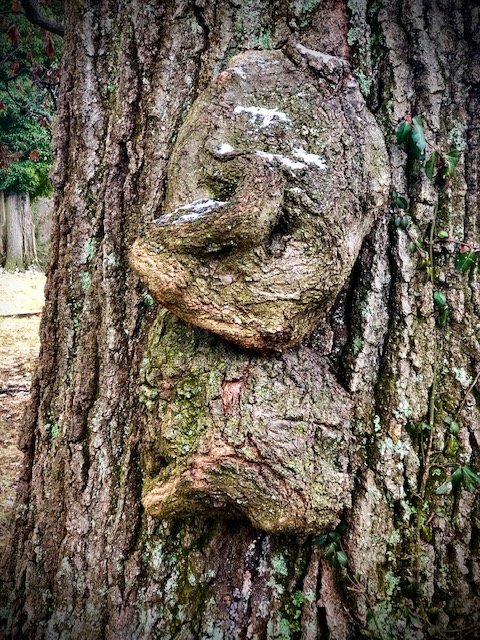
Ekphrasis of a Face on a Tree

This palette of oak grows
with a marbling of pale green
lichen to frame its pain.
Sculpted on a trunk, two swirling burls,
a bulging body and a face
with the tough skin of bark.
A dappling of color to offset despair.
And what of the ivy that twines
towards this sight? An Almighty mind-
shift against survival of the fittest?
The unseen hand scrapes beauty
from wounds, injury as medium,
near-death the instrument of the master.
The features poised uppermost
on the tree express wonder broken-free
of the soil at her feet, eyes half-closed
in reverie, mouth open in an “O”—
Oh, I’ve known this sort of wonder,
metal staples holding together the skin
of life, this scar I wear on my torso.

*Published in SWWIM Every Day: https://www.swwim.org/blog/2022/2/9/ekphrasis-of-a-face-on-a-tree
One of my biggest challenges as a poet is staying in the present moment and really seeing (sensing) what is right in front of me. Sometimes, I fall into this misguided notion that a particular subject must inspire me before I start writing. Of course, this way of thinking only stifles creativity. The sensory imagery around us shows us what’s inside. The poet Mark Doty wrote in The Art of Description that “every achieved poem inscribes a perceptual signature on the world…[The] work of seeing offers, ultimately, a precise portrayal of the one who’s doing the looking.” In other words, our unconscious minds reveal themselves in our descriptions of the present moment. There are no secrets. The images we choose and the way we convey these images betray us.
Most of you already know that Ekphrasis means “description” in Greek. On the Poetry Foundation website, the definition of an ekphrastic poem is “a vivid description of a scene or, more commonly, a work of art.” Ekphrasis can stay in the realm of imaginative description —a re-creation in words, if you will—or expand into a more personal musing, its meaning amplified through the artist’s senses. When I’m feeling stuck, creatively, there’s nothing more freeing than a trip to the art museum. When I sit before a sculpture or a painting, the focus is on the piece, not (blessedly) on “what am I going to write about today?” The subject is before me. I’m released from myself.
Or so I believe. The experience of the images comes from the inside. But, the illusion that I’m writing about something outside of myself is what gives me freedom of expression. In essence, I’ve tricked myself into believing that this writing isn’t about me. As seen in the poem above, a natural scene can present as art. In a “stuck” moment, I wrote about a tree. What burls—nature’s way of healing tree trunk wounds—represented appeared in the poem. My unconscious mind drew a parallel between the scar on my torso (my trunk) and the tree’s burls. I noted this evidence of healing. The way we incorporate our scars into a new self-image, but, even more, how they become a different kind of beauty. The expression I saw on the tree’s face seemed to express wonder. But, by now, you know that it’s my wonder I witnessed. My own surprise that I have thus far survived grievous injury and have stayed alive long enough to see the beauty in my scars. Or, at least, write about them.
Ekphrasis allowed me to experience a moment of recognition—and also transcendence. Ekphrasis can also be a lesson in trusting the creative process.
Petal Light
	-after Seamus Heaney
The cherries igniting in season,
Flower in rebirth, a grand hope for not-so-grand people,
Not wanting anything from anyone but that they see
These blooms spring from living,
Having opened each bud against darkness.

But every day your breath ebbs in your cave,
Shapeless and still, a wraith wrapped intently
In its shadow waiting for its kill;
So you walk outdoors toward the blossoms
And the monster loses its hold in the trees
And you stand beneath the pink and crimson,
Its scent-feast you pray will cleanse and release
As the petals rain down in a shower.
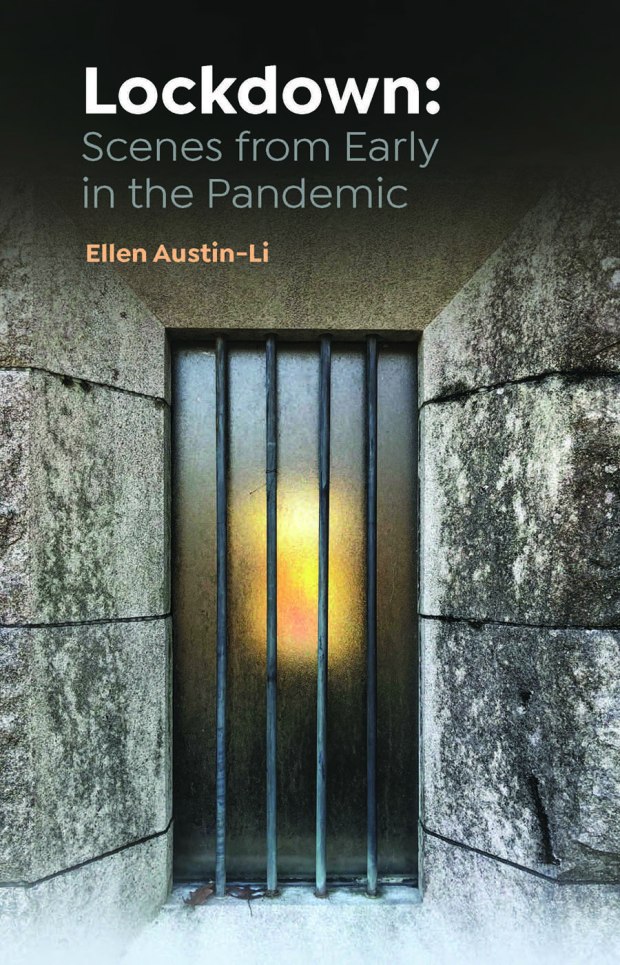
My second poetry chapbook, Lockdown: Scenes from Early in the Pandemic, now exists in the world. I’m grateful to Leah Huete de Maines at Finishing Line Press for once again giving my voice a home. When I wrote the poems in this collection, the coronavirus pandemic had a foothold in the U.S. and the country had gone into lockdown. We were all experiencing fear: personal and communal. So much was unknown about COVID19: the exact mechanism of spread, its rate of infection, how much danger we were in every time we walked out the door. If we were brave enough to venture out to the grocery store, many of us developed elaborate disinfection procedures for our groceries. Schools, restaurants, and entertainment venues shut down. Like so many other parents of college-aged children, I drove fourteen hours to pick up my son when the college dorms closed. Along the way, I stopped in my hometown, but couldn’t stay with my elderly mother for fear of inadvertently infecting her. We knew the elderly with COVID were not surviving and, worse, had to die alone. I stayed in a nearby hotel, wiped down the surfaces with Lysol, and sat on the edge of the bed. Numb. What was this strange new world?
Disconnected from extended family, alone with fear and uncertainty, most of us found our own methods of coping. Writing and daily walks in the blossoming Spring were my salvation. Inside, we watched the news reports from New York City with horror. Saw footage of emergency rooms lined with stretchers and wheelchairs occupied with people struggling to breathe, doctors and nurses wearing ski goggles and welders’ masks as makeshift PPEs, refrigerated trucks as makeshift morgues. But outside, trees and flowers were awakening from their deep sleep.
I don’t need to remark on the particular fear of this time, during what’s become known as the “first wave” of the coronavirus pandemic. I did, though, feel compelled to write about my experience of it. I’ve known fear—we all have—but this fear was its own kind of beast. Personal, yet shared. I wanted to capture its essence in poems—the best vehicle to deliver encapsulated moments. And didn’t we all have “moments?” Too many moments.
“Petal Light” is the final poem in Lockdown: Scenes from Early in the Pandemic, a poem written as a snapshot of resilience. Overwhelming fear does not happen only in a pandemic, of course. But, we all must walk to the other side of fear, no matter the cause. I hope this poem reminds you of your own moments of uplift, your own resilience. And, if you are willing to look back at how far we have collectively come in this ongoing pandemic, check out Lockdown (click on the book image to the right to take you to Finishing Line Press’s bookstore). May this pandemic become history soon.
Adonis

Maybe I didn’t really want to find you
or I would have hugged closer to where it culminated
forty-one years ago this past May in a crash
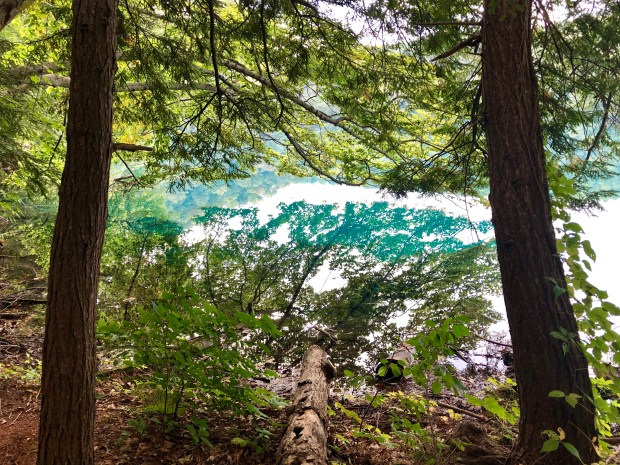
on the way to Green Lakes      your home    of course it was
since the water in those rare lakes
is the same turquoise as your eyes      like some god
had poured the overflow of them into you
I’ve been wanting to tell you
how sorry I’ve been for that night      I was behind
the wheel when I couldn’t even navigate
a sentence    I remember it was our first evening out
as ex-lovers but I knew I was in trouble
the moment I saw you step out of your house
and walk towards the Valiant        the sun hung low
enough to catch your hair and spin it gold
and ignite those eyes in the hottest blue flames
and the great span of your shoulders stretched
beneath a white button-down shirt    you burned
like Adonis come to call and there
was only one way I could answer
I ordered beer after beer at the bar
and I don’t know what happened next
except my head hit the steering wheel so hard
I didn’t open my eyes for three more days

          what the sight of you did to me

I opened my email four decades later
and there you were       you said I suddenly hummed inside
so you opened the internet and I spilled out
you read the poems in my book      lines about you
I made the mistake of telling my mother
who at 92 recalled your name
as if it was back then with her accusing me
of kissing you    our joined images   in the kitchen
reflected on the polished wood door
like it was something dirty she saw
she never liked us together    she sensed
our heat    how our hands always touched
each other’s bodies     one day
she called me back into the house
when my leg draped over yours
while we sat on the front walk    love
filthy love   desire and shame stained
in a way only buckets of booze could scrub clean
and this left you broken on the side of the road
you said I don’t owe you amends      it’s enough
that no one died      now I see us
sitting on a tree trunk fallen by the shore
our feet dangling in the cool green as we watch
our ripples meet on the surface.

-published in Literary Accents, Vol.1, Issue 4, 2021
When Art Delivers Forgiveness
The most I’ve ever wanted from my poetry is to create empathy. Whether it’s by composing an image a reader recognizes or by witnessing human interactions, I wish to convey the truth that elevates the human experience. The best possible outcome is to stir a connection with a reader, to allow them to reflect on their own lives in every context, to see something of themselves, or gain an appreciation for another.
With my first poetry collection, Firefly, I wanted to witness my own experience with alcoholism and addiction as a way to tell others who suffer that recovery is possible. But, underneath that, I tried to tell my story to create empathy in the larger world for alcoholics and addicts. I thought if I could capture some of the nuances of living with this shadow—the crippling self-doubt, the denial, the shame—perhaps I could open a space for those unafflicted to begin to understand this often misunderstood disease.
Never (“in a million years,” as we used to say) did I expect to hear from someone I had gravely injured during my drinking days. The poem I posted tells the story better than my prose can recount because, for me, the difficult-to-capture emotion shimmers between the lines with poetry. I don’t know if my first poetry collection accomplished my grand dual goals of creating hope and empathy for fellow alcoholics and addicts. If I only reached one, then baring my soul was worth it. But, I do know that publishing Firefly gave me something I never thought possible: forgiveness.
I don’t think I was fully aware of the shadow I had internalized and carried around for over forty years until I heard from the person I had harmed. I still struggle with the damage I have done. In recovery, we hear, “we do not regret the past nor wish to shut the door on it.” Intellectually, I know this concept concerns using our past experiences to help other people, but it can be challenging to embrace, especially when you have caused lasting bodily injury to someone else. The old part of me still says I don’t deserve forgiveness. I’ve been carrying this shadow for so long—I don’t know how to let it go. But, it doesn’t feel as heavy now that I’ve taken the shadow out into the light—art, specifically, poetry, allowed me to do that. I’m forever grateful to the generous soul who granted me forgiveness, so I can perhaps learn to forgive myself. Thank you. You know who you are.
Smoke

All I want is a tiny cottage
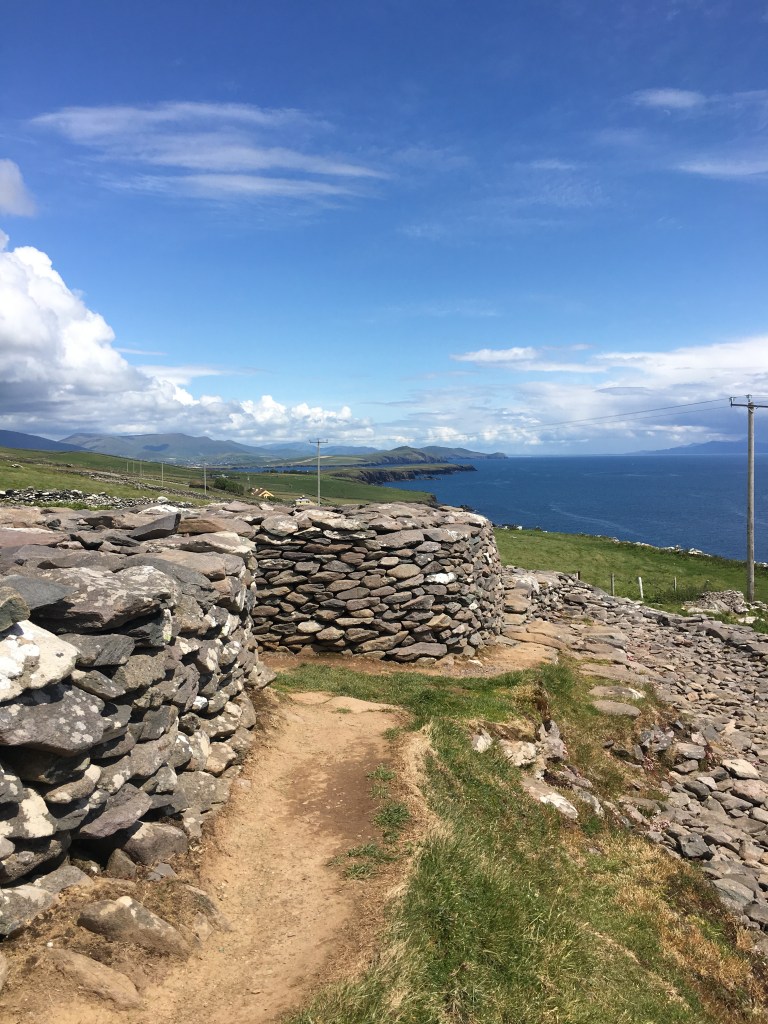
on the Dingle Peninsula. I could live
in peace on this windswept green.
America doesn’t own me anymore.
I’d rather fly to family via Aer Lingus than drive
up Ohio, across Pennsylvania, to New York.
I’m done passing the billboards
on 71N in Ohio, the Ten Commandments
split between two canvases alongside
the barn, the Confederate flag painted
on its roof. I don’t wish to be reminded
by the sign on the trip back that “Hell Is Real.”
Hell, yeah, it’s real. America is aflame.
With each wildfire season, the West
gets torched, fueled by the superheat
of our heedless need. Cities are coals of unrest,
Black sons & daughters gunned-down as if prey.
Give me the Wild Atlantic Way,
Ireland’s west coast instead. Let me puzzle
the Gaelic posted above the English,
let me turn into a pebbled drive
beside my pastel-painted home, let the hearth
be spirited with peat. Near the coast,
standing stones frame a doorway
the ancients believed you pass through
into another world. My ancestors fled
Ireland because they were starving, I hunger
for this place to belong.

- published Nov. 27th, 2020, by Indolent Books in "Transitions: Poems in the Afterglow."
https://www.indolentbooks.com/transition-poems-in-the-afterglow-11-27-20-ellen-austin-li/?fbclid=IwAR1VGkrMCTlm7qhPxaG2lX4d0ZUSlrBBvLKzmwQ5mOyS6fAhzZ6H_hQrMbA
To say 2020 has been a challenging year for us all is an understatement. No real news there. For many of us, the state of our socio-political landscape only adds to the stress of trying to navigate the pandemic. For me, feelings of hopelessness and simply being discouraged by the level of willing complicity in perpetuating systemic racism, coupled with an unwillingness to commit to behavioral changes that would meaningfully address climate change, create a tipping point. I know I am not alone in feeling overwhelmed. As a poet, I believe bearing witness to these fraught times plays a dual role, both as an encapsulation of this time and as a balm for myself and others. It’s important to know we are not alone, maybe even more so while the pandemic separates us.
A year ago this past May, I made my first trip to Ireland—the land of my ancestors (most of them, anyway). The physical beauty of this island—its vibrant greens riven with rough-hewn stone walls, its dramatic shorelines, especially on the West Coast along the Atlantic—drew me in. Even more magnetic were the stories associated with the ancient sites: the ring forts, the standing stones, the dolmens, the fairy forests. The other-worldliness felt familiar, as if I had participated in these stories before. I left Ireland reluctantly, feeling as if I had finally made it home. That feeling may just be the fanciful writer in me, but it stayed inside. I’m still writing about that trip today.
It seems inevitable that Ireland would be the place I turned to (in this poem) when I felt so overwhelmed after the November election. The trauma over the past four years, culminating in this deadly pandemic’s gross mismanagement, which has unnecessarily cost far too many lives, and so many of my fellow Americans voted for the same leader? I don’t recognize my country anymore. Forgive me if our politics diverge, but even if they do, how can any of us believe that the murder of George Floyd (and so many more Black Americans) is not a call for a major change? And how can any of us choose to support climate change deniers when the evidence becomes more urgent every day?
I know that my home is here, in America, and that this is where I need to stay if I want to be part of the solution. But, sometimes, it helps to fantasize that I can run away to a place where I can live a simpler life, a place that offers more peace. In the short term, such psychic escape holds great allure. Dreaming of departure is a way to cope, maybe even express this anger that has nowhere else to go (save a poem). Putting the words down, articulating at least some of the frustration, offers relief. But naming the issues, ironically, reveals that I know what must be done. Awareness of the problem(s) is always the first step. The next one? What actions can I take to be part of the solution?
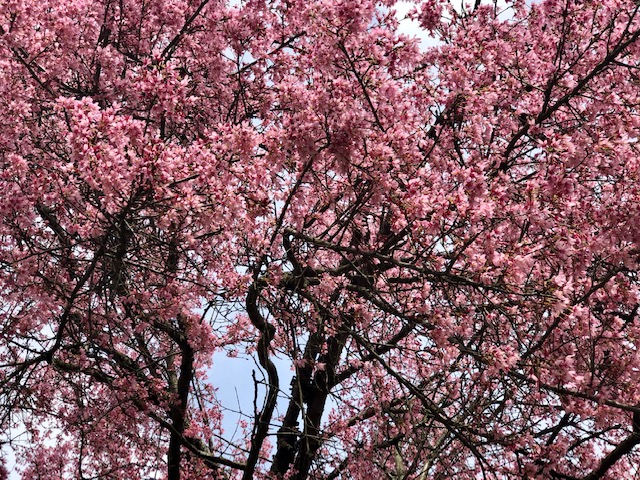
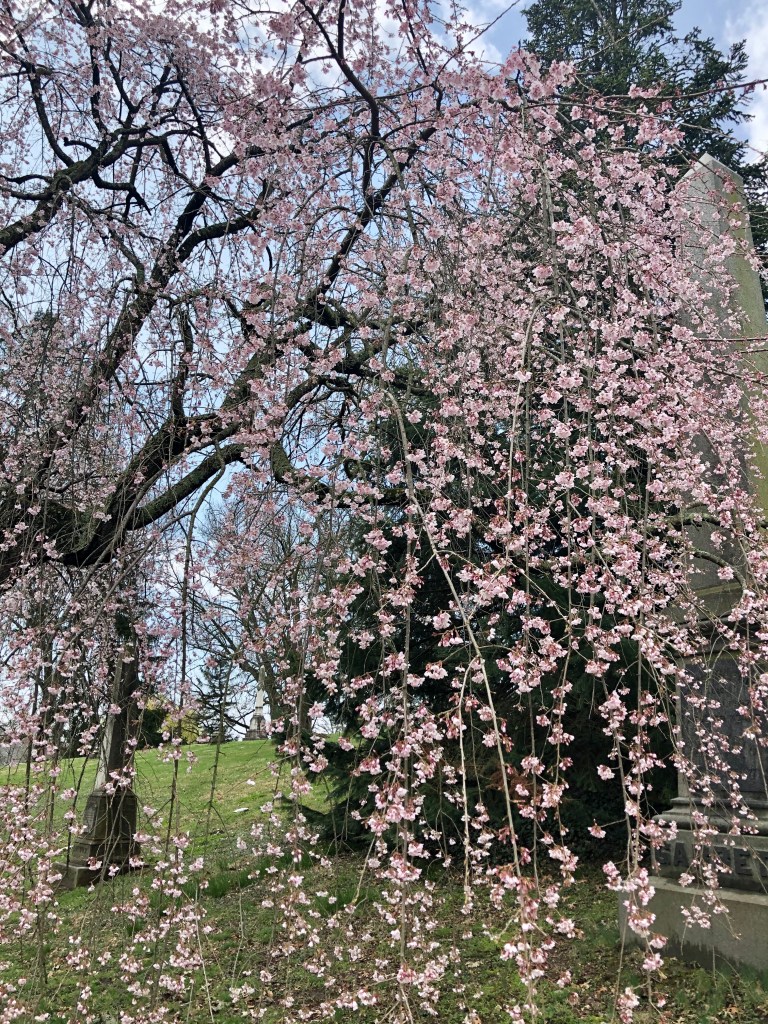
Weeping Cherry in Spring Grove Cemetery, Cincinnati, Ohio
“God, grant me the serenity to accept the things I cannot change, the courage to change the things I can, and the wisdom to know the difference.”
Living through this pandemic, in a time of overwhelming fear, presents all of us with significant challenges. We, in the recovery community, have the opportunity to be of service to the world outside of our rooms (which currently happen to be virtual rooms on “Zoom”). We share the blessings of practice, sometimes years of practice, in navigating fear. We learn tools in recovery to help us live “life on life’s terms,” as we like to say, which helps us to stay sober. These same lessons can be applied by anyone who feels overwhelming fear, and that is the whole world right now.
This writing isn’t to say that people in recovery no longer suffer from fear, or that we are immune to the same fear that others feel during this pandemic. Everyone is frightened right now — but, we have tools we can share with non-recovery folk, which may help get all of us to the other side.
Has there ever been a better time to live by the Serenity Prayer? The first part of the Serenity Prayer reminds us that we need to accept what we cannot change. We have to accept the uncertainty of this time, as we do not have any control over how the Covid19 pandemic will unfold. I’ll admit, this has been a struggle for me, mainly because I have been stuck in anger directed at (my perception of) the federal government’s mismanagement of this crisis. Whether or not you agree with my political position is not essential — the point is, I cannot get to a place of acceptance, of serenity, if I allow resentment to take center stage. If I’m not the problem, there is no solution. I have to work on letting go of this anger. For me, that means praying for the people in the governmental institutions I am furious at right now to detoxify myself.
For those of you who balk at the word “prayer,” let me assure you that I am not a religious person; I do, however, consider myself spiritual in that I believe there exists a power greater than myself. I’m an agnostic in recovery — and I know atheists, too — and I pray. Sometimes my prayer is as simple as please, give me the right words, or help X person do the right thing. I know from experience that prayer, over time, changes something in my brain. The circumstances that caused the resentment in the first place may not necessarily change, but I do. And that’s the name of the game: learning how to let go of overwhelming emotions that hinder your ability to not only cope with life, but to function.
The next part in the Serenity Prayer, “the courage to change the things I can,” makes living with fear and uncertainty bearable. I can’t change the fact of this pandemic, but I can do my part to change what I can. I can decrease the chance of getting Covid19 by following the recommendations of health experts: practice social distancing, wash my hands frequently (for 20 seconds!), and not touch my face. These actions, in turn, help everyone else in the community by limiting the spread. I’m experiencing intense fear around the lack of PPE’s for healthcare workers, as I am married to one and have many working nurse friends (I’m a retired nurse). What can I do? I wish I knew how to sew, but I know people who do. I’ve shared information on social media about how to connect with organizations that are making masks. I’ve encouraged anyone with a stash of masks to consider a donation to their local hospital or nursing home. (Not all of your masks, as I understand the desire to have some for yourself, but there is info online about how to reuse masks for non-healthcare workers safely). That’s all I can do about PPEs, but it’s something.
I can also be kind and loving within my own home, even though stress brings out the worst in all of us. I can apologize right away when I’ve said something hurtful and vow to myself to try to be better next time. It’s not about what other people say or do; it’s about what I say or do. I have control over my reactions in every interaction.
The final part of the Serenity Prayer, “and the wisdom to know the difference,” tells us to look at and reevaluate our current responses. If I can’t get close to serenity, I know that I am probably confusing what I cannot change with what I can. The distinction isn’t as crucial as it is for me to stay in action mode. How I feel does not have the same consequences as what I do with these feelings. We are all fearful right now. We can take care of ourselves by acknowledging our fear but also by taking action — be it through prayer, walking, calling a friend (or a therapist, if needed), or practicing acts of kindness in our own homes. When we take care of ourselves, it ripples out towards others.



 Ellen Austin-Li