Ellen Austin-Li

poet and writer
Ellen Austin-Li
  • Home
  • Blog
  • Showcase
    • Poetry
    • Essays
    • Books
    • Select Journal Publications:
  • About
  • Events
  • Contact
  • Category: Uncategorized

    • Special Exhibit (at Ragnar Kjartansson’s Video Installation, “The Visitors”) — Ellen Austin-Li

      Posted at 6:18 pm by Ellen Austin-Li, on March 8, 2019

      A recent publication

      masque&spectacle's avatarMasque & Spectacle

      I have been on a string of so many days
      hung low. The truth is I am
      often tired of being alive, of daylight
      streaming through the translucent glass
      of my body, my virgin rebirth, discarded
      diamonds. I am the water in fountains
      people dance past.

      These days weave together
      on a loom, an unfinished tapestry
      with a repeating pattern: spoiled wool,
      dank, with rare flashes of gold.
      The truth is I am often tired
      of being alive, though I know this mantle
      can unravel with a pull on a thread.

      I trudged up concrete steps
      into the Art Museum, muscles sobbing
      with repetition, this desire to rise
      above the carved marble of my heart
      pushing me inside another air-conditioned
      hallway, where winged statuaries ushered
      me up, up, up, hushed

      into the darkened gallery. Shush,
      whispered metal brush on cymbals,
      the drummer on one screen of nine,
      each in a…

      View original post 280 more words

      Share this:

      • Tweet
      Like Loading...
      Posted in Uncategorized | 0 Comments
    • On Writing “Wild Hive”

      Posted at 6:49 pm by Ellen Austin-Li, on February 21, 2019
      Wild Hive

      A rumble summoned my husband last Spring
      to rescue a beehive; he found it
      hung like a tongue abuzz with hunger,
      urgent hooligans hunkering around
      a honeyed crux. He clipped the bunched
      cluster, curried the tree branch, and dumped
      it into a hovel.

      He had three hives at the beginning
      of winter, but only the mined line
      survived this time. He thinks

                          there’s something in being wild 
                          that keeps things alive

      *"Wild Hive" was published in Pine Mountain Sand & Gravel, Fall 2018.

      “Wild Hive” is the first poem in my poetry collection, Firefly. This book is an unfolding redemption story, as it paints the picture of my descent into alcoholism and addiction, as well as my struggle to live sober. I hope that “Wild Hive” introduces the reader to the sense of the bewilderment that permeates the mind of an addict. How did I get here? Why am I still alive? If it is my wild nature that helped me survive, what does it mean?

      My husband has been a beekeeper, an apiarist, for several years now. He possesses the mind of a scientist, so he studied all of the latest information on beekeeping; he has become quite the expert on all things related to honeybees. His enthusiasm has infected me as well. I have become as invested in the survival of our hives as he has—well, almost as invested. I’m sure the person who actually does the work of a beekeeper is the one most attached to the outcome.

      Two years ago this Spring, a couple who are good friends of ours called my husband. A swarm of honeybees had gathered in a tree near their home. Swarms occur for reproductive reasons; a queen bee leaves her hive, taking a number of workers with her, to form a new colony. Our friends had learned, probably from my husband, that it’s best to call a beekeeper to come and retrieve a swarm for their own hive collection rather than call an exterminator. With the honeybee population in decline, we need to respond to swarms in a way that protects them. So, off went my husband, garbed in his netted hat, to rescue his first swarm.

      The rescue unfolded just as described in the first stanza of “Wild Hive:” he clipped off the tree branch on which the swarm had clustered, dropped it into a cardboard box, and brought it home. At home, he used his smoker, an aluminum can that bears a striking resemblance to the Tin Man’s oil can in “The Wizard of Oz,” to blow smoke at the bees. The smoke masks the alarm pheromones of the bees, allowing a beekeeper to work around the hive without getting stung; in effect, the smoke stuns the bees into submission. In this way, my husband was able to get the wild bees settled into their new home.

      This “wild hive,” meaning a hive that was not cultivated for sale to beekeepers (yes, there is such a thing), but was instead formed in the wild, thrived. At that point, the wild hive constituted my husband’s third hive; they were safely ensconced in their own set of hive boxes.

      Most hives are lost over the winter months. Several theories have been posited on the causes of colony collapse disorder, such as the widespread use of pesticides, climate change, or mite infestation; most likely, it is a confluence of factors. When springtime arrives, beekeepers assess their losses—my husband has lost most of his hives each winter and needs to begin again with new bees each spring. The springtime following the first winter of the wild hive heralded a big surprise: the only hive of the three that made it through the winter was the rescued hive. Not only had it survived, but it had flourished.

      When my husband reported this news to me, I asked him why he thought the rescued swarm had made it through the winter when his other, more established, hives had not. He shrugged his shoulders and offered this considered response:  “Maybe there’s something about being wild that keeps things alive.”

      This comment resonated deeply with me; it incubated in my mind for several months, almost like the bees themselves, looking for a place to colonize. In a poetry workshop, the words of this poem spilled onto the page fully formed, as if they had been there all along. In this workshop, the facilitator read William Blake’s “The Tyger”—he prompted us to write a poem or an essay using sound in an inventive way. In one of those too-rare moments of poetic inspiration, this poem wrote itself.

      So, why did the words my husband had planted months before worm their way into my subconscious? For me, this message, which appears in the last two lines of ”Wild Hive,” voices what I have often wondered: how is it that I am still alive, given my wild past when I was blackout drinking and using drugs? At 20, I crashed my car while driving drunk into a barn on the side of the road. The accident happened in the middle of the night on a back-country road. We were lucky that another car happened upon us— my ex-boyfriend crawling along the side of the road with a shattered back; me, bleeding internally, pinned behind the steering wheel.  Unfortunately, there were many more years of risky behavior while drinking and using drugs. I did not get sober until over forty more years had passed.

      Why did I survive? It is unknowable, but it is a common question in the human condition. Why does one person live through a series of traumatic events while another dies young, having lived a short, blameless life? “Wild Hive” is not meant to posit an answer to this complex question, but instead reflect the seeming randomness of mortality. During the peaks of my disease, when I was filled with self-loathing, I didn’t want to continue living. I was too entrenched in the hopelessness of addiction to see a way out. I am grateful that I am now sober—on a good day, I see how my experiences may help another to recover. That is the meaning that I attach to my own survival; that is the way I make sense of this question.

      Share this:

      • Tweet
      Like Loading...
      Posted in alcoholism/addiction, poetry, publishing, recovery, Uncategorized, writing | 0 Comments
    • Why Firefly

      Posted at 3:22 pm by Ellen Austin-Li, on January 2, 2019

      What manuscript? Those were my first thoughts when I read the subject line on the email. It was nearly midnight on a Sunday night this past July when I opened my email to find a publication acceptance for my first chapbook, “Firefly,” from Finishing Line Press. I was taken by surprise on so many levels—the first, not remembering submitting it at all. A quick search of “Submittable” yielded the answer: I had submitted this manuscript in April to the “New Women’s Voices” chapbook competition at Finishing Line Press. I had neither won the contest nor placed, but my poetry collection had been accepted for publication nonetheless. My mind flashed back on the moment when I hit “send” on this submission. A strange confluence of events had led me to compile this collection.

      The impetus for “Firefly” was a substitution for a different project. The year before, I had written a larger collection about the nearly concurrent deaths of my father and my nephew. These were poems I felt driven to write. I felt I owed them this debt, to create something in their memory. My intention was to see this collection in print, dedicated to them, but it just wasn’t gelling. I received advice from a poetry mentor to put aside this work for some time, to allow more distance from these tragic events, so I would be able to come back to the work with a clearer head.

      I also learned more about the world of poetry publication. After publishing individual poems, a poet typically publishes a chapbook or two before a larger collection. I wasn’t sure what my vision was for these poems about my father and my nephew, besides illuminating how different losses affect a family, though I had followed an inspiration to deepen the grouping with parallel poems grounded in nature. I understood the wisdom of devoting myself in the interim to a new project. I moved towards arranging a smaller, unrelated group of poems into a chapbook, mined from the hundreds of poems I had written over the previous six years.

      “Write what you know,” they say, and I had written plenty about what I know most intimately—alcoholism and drug addiction. I found poems I had written about drinking consequences when I was young, like a near-fatal car crash, but I also had some poems from my more recent struggles to live sober. I wrote several new poems to fill in the gaps. I liked the idea of painting this story in poetry, in more metaphorical terms—to me, this made the events, or at least the feelings they evoke, more universal. I want reading this collection to be like standing in front of an impressionistic painting in an art museum. Up close, you see individual brush strokes; step back, you see how the splotches of color come together to create a whole.

      Just six days before I opened the acceptance email, this same collection was evaluated in a poetry manuscript class I was attending. The anxiety I felt around having other flesh and blood humans read about my descent into alcoholism and addiction, even told in the “slant” way of poems, startled me. I felt naked, exposed to their potential negative judgements. There were only four other people in this class, and I knew most of them well. This was not a room full of strangers. So, why was I feeling this way? It was one thing to write the individuals poems, many of which these fellow poets had heard; it was another to string them together into a whole that painted a vivid (I thought) portrait of my underbelly. Sending this same chapbook electronically to disembodied individuals at a press, people whom I have never met in person and probably never would, felt like much less of a threat.

      Every criticism I heard in that class, constructive or otherwise, magnified in my mind. I considered abandoning the chapbook, as I could not pinpoint from where this negative energy sprung. I could not have foreseen how much worse I would feel after receiving the acceptance.

      I did not sleep after I opened that email. A part of me felt excited and relieved about the news—maybe my writing wasn’t as bad as I had told myself the whole week after my manuscript class. But, as the sleepless night crawled towards morning, I was steeped in fear. My skin itched and I shifted positions as my brain raced: maybe this collection is inferior work. People will read it and know that I am an imposter. Worse, I obsessed over the subject matter: What was I thinking? How could I expose myself like this? Everyone will know about me.

      It didn’t take me long to realize what was going on. Shame has this way of reappearing when I least expect it. Clean and sober over 14 years and I thought I had the shame-thing licked—it seems it had only been neutralized in the rooms of recovery. Being in the company of others who had also slid beneath layers of bad experiences due to alcoholism and addiction had magically lifted the paralysis of shame. I entered rooms full of men and women in recovery who were smiling and laughing. These were people who were joyful after having had some pretty awful stuff happen when they were using. If they could do it, so could I. That’s how recovery works, at least for me—bathed in the acceptance of others who would never judge me, who understood how I thought and felt, I could heal after years of believing myself incapable of living a different way.

      Over 20 years ago, before I got sober, my husband sent me to a psychiatrist who specializes in addiction medicine. Something he said stayed with me all these years: The hallmarks of alcoholism and addiction are shame and isolation. All these years later, I understand that shame and isolation are as much a part of me as my drinking once was. Living sober has helped me rise above these states of being towards which I naturally gravitate. Writing about my alcoholism/addiction helps me to NOT isolate with the effects of the disease. My hope is that, by sharing my story, I will reach at least one person who struggles with the same shame, one person who is tightly bound in their own cocoon.

      Share this:

      • Tweet
      Like Loading...
      Posted in Uncategorized | 0 Comments | Tagged alcoholism/addiction, poetry, publishing, recovery, shame
    • The Journey Begins

      Posted at 7:26 pm by Ellen Austin-Li, on November 26, 2018

      Thanks for joining me!

      Good company in a journey makes the way seem shorter. — Izaak Walton

      post

      Share this:

      • Tweet
      Like Loading...
      Posted in Uncategorized | 2 Comments
    Newer posts →
    • Author photo by Suz Fleming

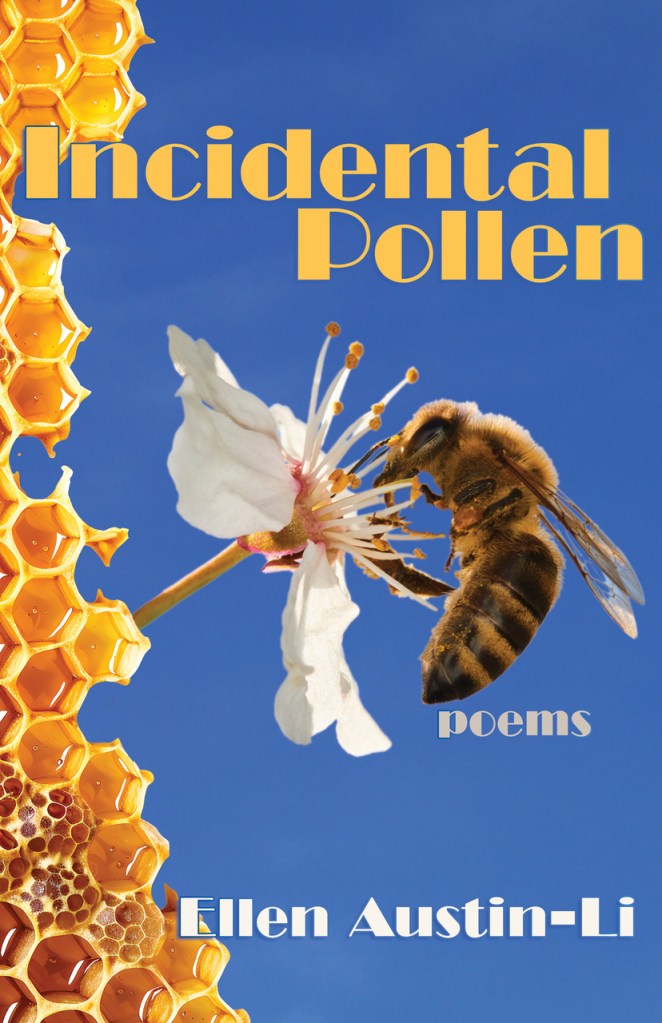
    • Publication date May 21st, 2025. Click on image to order from Madville Publishing.
    • Books

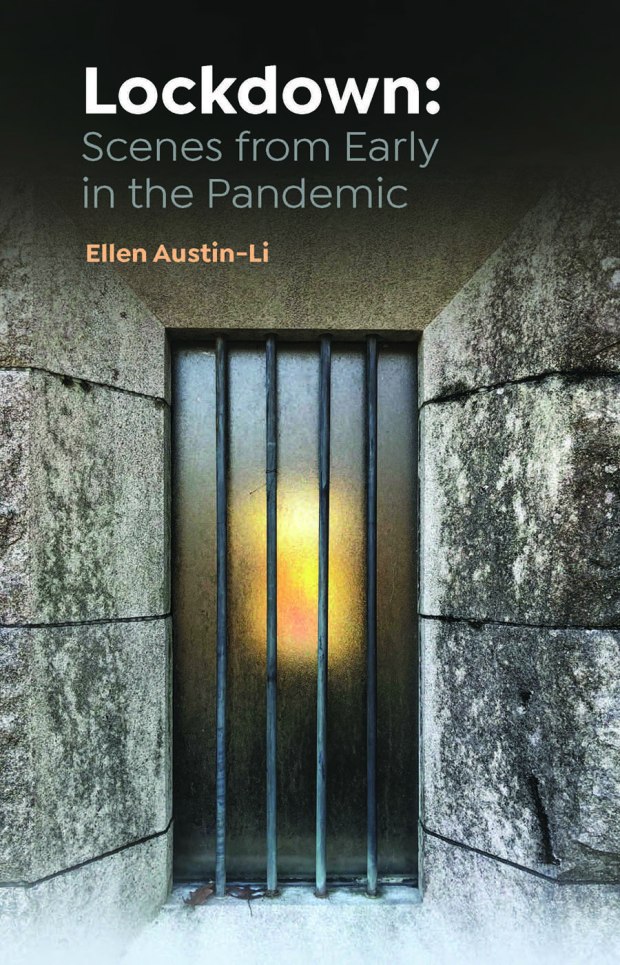
      Publication date: August 6th, 2021. Click on image for Finishing Line Press's bookstore

    • Books

      artwork by Elaine Olund @ EEO Design

      Firefly is available for sale at Finishing Line Press or at Amazon.com

    • Blog Posts


  • Unknown's avatar

  • Tags

    Agnostics alcoholism/addiction book-review books cilmate change Covid19 creative-writing Friendship GreenLakes higher power Ireland literature Living with Fear loss MFA programs nature November election poem poetry prayer publishing racial justice reading recovery shame spiritual awakening spiritual experience spirituality Walking writing
  • Follow Ellen Austin-Li on WordPress.com
  • Follow Us

    • X
    • Instagram
    • Facebook
  • writing, publishing, poetry, alcoholism/addiction, recovery

    alcoholism/addiction poetry publishing recovery Uncategorized writing

Blog at WordPress.com.

  • Subscribe Subscribed
    • Ellen Austin-Li
    • Join 37 other subscribers
    • Already have a WordPress.com account? Log in now.
    • Ellen Austin-Li
    • Subscribe Subscribed
    • Sign up
    • Log in
    • Report this content
    • View site in Reader
    • Manage subscriptions
    • Collapse this bar
 

Loading Comments...
 

    %d