Ellen Austin-Li

poet and writer
Ellen Austin-Li
  • Home
  • Blog
  • Showcase
    • Poetry
    • Essays
    • Books
    • Select Journal Publications:
  • About
  • Events
  • Contact
  • Tag: poetry

    • Weather, Then the Book Roll-Out

      Posted at 4:55 pm by Ellen Austin-Li, on December 1, 2024
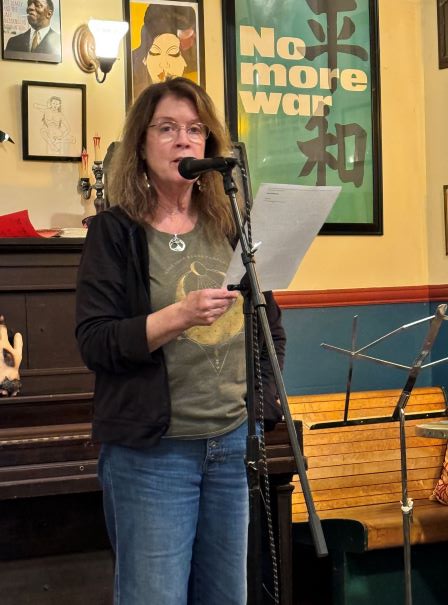
      At Poetry Night at Sitwell’s in Cincinnati

      Weather

      In a year of extremes, the deepest
      losses and the sweetest touches, I am
      here, my eyes open every morning (against
      my wishes) clear blue until the dark

      sky moves in—the rain swift as a summer
      storm, turbulent air, and broken hair
      in high winds—just as suddenly, the weather
      passes and the statues of all I have lost stand

      in the clearing: my sister and brother
      in the next world, the beautiful words
      we chiseled at the end of their lives; and I
      remember how love once looked like eyes

      from across a crowded room, and my first-
      born son will soon join hands with his own
      beloved, and there is another first—my book
      of poems to usher in this spring, after some

      cold has passed—the work that circles grief, even
      as I see (perhaps) at last, this journey is all about
      weather, weathering the weather—warmth
      and the worst of it—in varying measures.


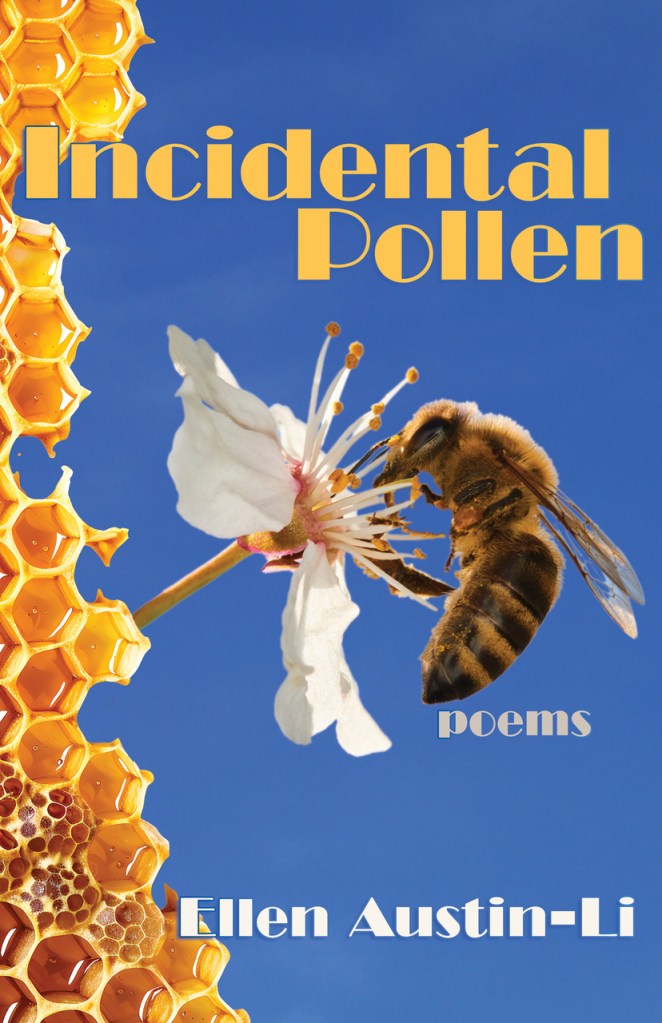
      The day has finally arrived: December 1st. Pre-sales are open for my first full-length poetry collection from Madville Publishing, Incidental Pollen. Sometimes, the universe gives us pain, and sometimes, beauty. I’m grateful this first book landed with Madville as the runner-up to the Arthur Smith Poetry Prize and that I received this good news at the beginning of a very painful year. I’ve lost two central people in my life this past year; someday, I’ll be able to write fully about these losses, but not yet. Today, I’m here to celebrate the collection dedicated to my father, my nephew, Jeffery, and my sister, Mary.

      RUNNER-UP FOR THE 2023 ARTHUR SMITH POETRY PRIZE

      Incidental pollen refers to pollen that collects on bees as they forage for nectar—like the cumulative life experiences we cannot help but carry. The hive serves as a thematic thread in this collection that explores the space between past and present, shame and redemption, grief and resilience. Poetic forms lend meaning—like the villanelle that captures the grief-driven magical thinking of the speaker. Are recurring red fox sightings visitations from her deceased father and nephew? Trauma and loss appear in these tonally rich and imagistic poems, but the arc ultimately centers on the search for belonging, the attempt to recreate home.

      I am most grateful to Madville Publishing’s founding director, Kim Davis, and poetry editor extraordinaire, Linda Parsons, for creating such a stunning final product. If you order Incidental Pollen, I hope it moves you and speaks to you. These poems were many years in the making.


      Share this:

      • Tweet
      Like Loading...
      Posted in Uncategorized | 0 Comments | Tagged book-review, books, literature, nature, poem, poetry, reading, writing
    • As If a Child

      Posted at 9:07 pm by Ellen Austin-Li, on March 10, 2024

      Moments, an announcement, and a dedication

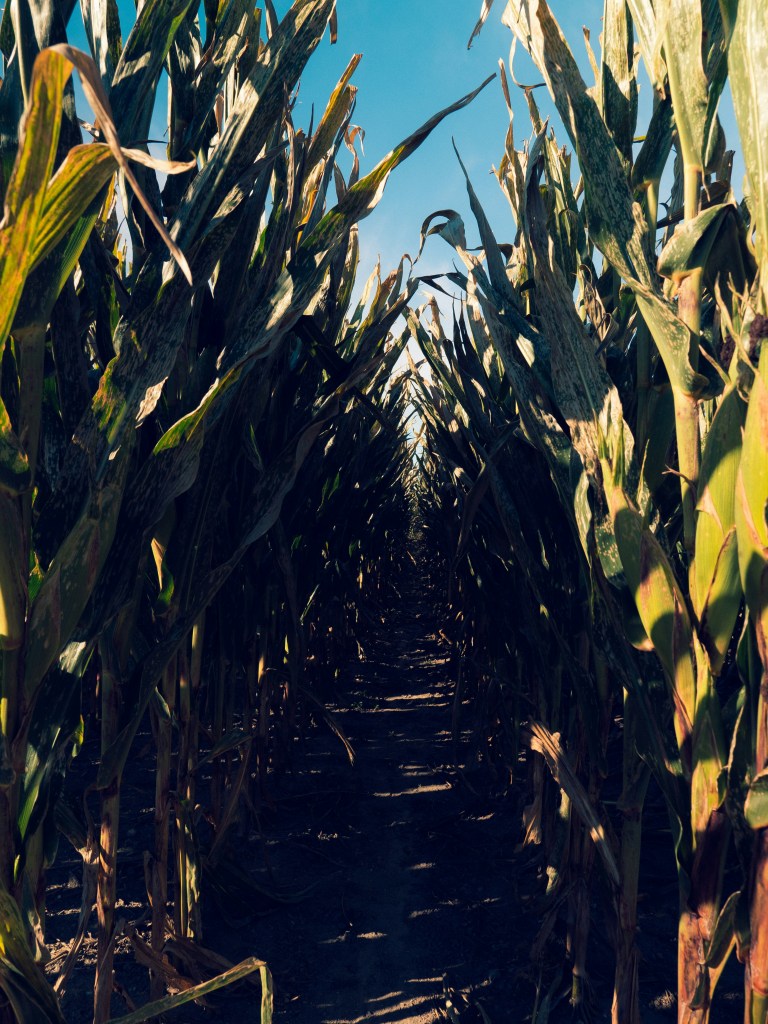
      Photo by Chris Bair on Unsplash
      Eight Years Old in the Corn Rows

      Racing down the alley of August,
      I slow as I am alone
      among the rows, hidden
      in our game of hide-n-seek
      on Nana’s farm. Timeless
      summer. The stalks rustle
      and the breeze kisses my bare arms,
      fine hairs lift as my body cools.
      Silence as the in-between stillness
      settles. There, a monarch,
      russet and black-rimmed, lands. I swear
      I hear its wings flutter.
      Cicadas crescendo when the sun burns
      between cloud cover. I hear
      one of my brothers or sisters’
      footfalls nearby, then retreating. Hush‒‒
      the wind rushes around me.
      I will stay forever.

      *published in Of Rust and Glass, the Awakenings Issue No. 15, 2024
      Of Rust and Glass, the Awakenings Issue.

      I’m announcing that my first full-length poetry collection, Incidental Pollen—2023 Trio Award finalist, 2024 Wisconsin Poetry Series semi-finalist, and 2023 Arthur Smith Poetry Prize runner-up—is forthcoming from Madville Publishing in May 2025. I’m astonished and grateful to the contest poetry readers (Joshua Rogers & Darius Stewart) and contest judge Marilyn Kallet (Poet Laureate Emeritus of Knoxville, TN) for recognizing my manuscript in this way. I am also thrilled to work with a women-led press (Founding Director Kim Davis and Poetry Editor Linda Parsons). Mostly, though, I’m grateful to bring this particular collection of poems dedicated to my father and nephew into the world.

      Announcements have this nagging way of showing you how absent you have been from certain spaces. My intention to post a new blog entry every month has clearly fallen away. I have been hiding in these corn rows, brought back to those early years, as I navigate some difficult emotional territory. The formative years live so deeply in me that sometimes I believe I am back there, with all the people I love most in the world—especially my brothers and sisters—nearby. I know they’re there. I may not be able to see them, but I hear them so close I believe I can touch them. These moments are the most important to me. Composing poems is the closest I can come to capturing the ephemeral —sharing the sacred so I can fix it in time and space—and perhaps touch someone else at the same time.

      My family of origin lost our brilliant and gentle father in December 2017. At age 93, his death was expected and (thankfully) peaceful. Just three weeks later, we suddenly lost my talented and equally gentle nephew, Jeffery Cox—my sister’s son—under traumatic circumstances. These losses feel like a lifetime ago to me (I’m sure my experience of loss is different from others in the family), but they weren’t. In many ways, these first significant losses had an outsized impact on all of us. I’ve been carrying these poems around for several years; it’s finally time to let them go into the world with the dedication page that’s been fixed in place since the book’s inception.

      Share this:

      • Tweet
      Like Loading...
      Posted in Uncategorized | 0 Comments | Tagged creative-writing, loss, poem, poetry, writing
    • Solstice: Where I Begin Again

      Posted at 4:14 pm by Ellen Austin-Li, on February 28, 2020
      Winter Solstice
       
      I.
      Dark
       
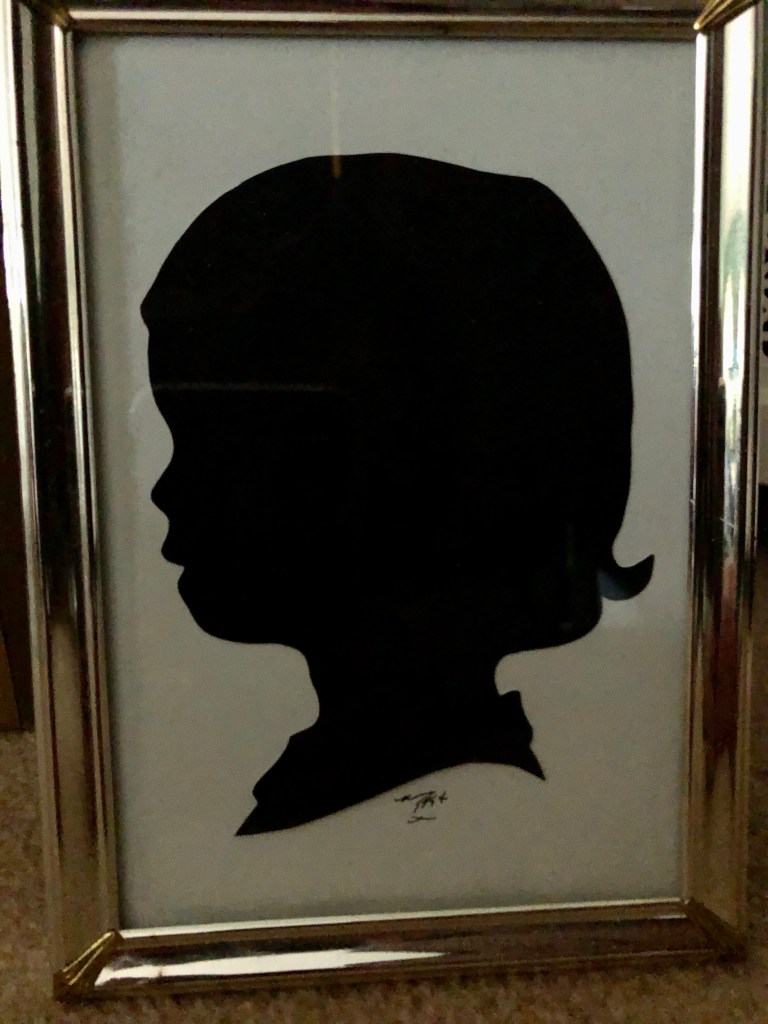
      One Christmas, my mother gifted me
      my childhood silhouette in a silver frame:
      a featureless profile in black, set against
      a white background. I recognized
      the weak chin and the errant curl flipped
      below my crown. What better self-portrait
      of youth than a faceless one, lips gapped
      as an accessory to take in more air?
      That little girl was all shadow, swallowed
      by the too-brightness around her.
      And she had no eyes — nothing to bring in
      the light right there in front of her
      as she turns away to face the coming
      of the longest night. She cannot see
      that this darkness means rebirth.
      On Winter Solstice the ancients say
      the sun is born. I wish I could cut
      an aperture in the dark form, save her
      from a lifetime of blindness.
       
      II.
      Light
       
      I open the mason jar, switch on
      the fairy lights — a string of fireflies
      animate as if it’s June and I’m capturing
      lightening bugs in the backyard.
      I screw on the metal lid and recall
      how the real ones flickered, then faded
      overnight. I lift this gift from a friend,
      unblinking, bold, brilliant: a beacon
      lit from the inside.
      And the stars start out on their cold slide through the dark.
      And the sun kicks inside the dark womb of the moon.
       
      * Italicized line from “Clear Night,” by Charles Wright

      Published in Anti-Heroin Chic, December, 2019


      Where I Begin Again

      Two months past the Winter Solstice, and I’m two months into my new life as a graduate student. Just a year ago, this plan was only a seed in my brain, but I followed the flow in a confluence of events and stumbled upon a graduate program in poetry that welcomed me into its fold: the Solstice Low-Residency MFA in Creative Writing Program at Pine Manor College. All the check marks fit into my neat little boxes—excellent faculty, exciting writers-in-residence, reasonable price, and on a woodsy campus near my beloved Boston, where so much of my history resides.

      I could not have predicted the hold poetry took on my soul. Part prayer, part meditation, poetry is a lifestyle, a life force, central to meaning-making at this developmental stage (yes, we are always in a developmental stage!) when understanding where I’ve been and how I got here occupies the mind. For me, using poetry as a tool, I step into the future. What will I leave behind? Studying the craft of poetry gives some intention to this question. I intend to gain clarity around this with each piece I write.

      There are advantages to returning to school at age 62, one of them being a pure motivation to match my written work with my intention. I’m not bogged-down by ego-driven ambition. One could say that being a relatively new writer at my age precludes any sort of notoriety. I’m in this to learn. I am in the enviable position of a woman who has already paid her dues in the workplace, has raised two sons, and finds herself with the time and the means to begin again. A friend of mine noted that most people are winding down at my age, but I’m in a different position. My progress was slowed by downed trees. I am nearly 16 years sober, but it’s been a hard-fought journey. I am most grateful to have emerged from these woods—late, but not too late, never too late—to rejoin the world.

      Disadvantages do exist in this scenario: I am often befuddled by what it is I am trying to say. I bring to every new experience a lifetime of memories and preconceived notions. Some may call this experience wisdom, but sometimes it’s difficult to wade through the committee in my head to distill the center in a poem. Psychologists call the ability to weed through information to find what’s important, “saliency determination;” I must have a deficiency there, now that I’m “awake.” Everything seems important to me. Writing poetry forces clarity—an exercise, or rather a practice, in awareness. In this way, composing poems fits into the framework of recovery: it is a significant part of my spiritual life.

      I approach this work with a sense of gratitude. I’m grateful to have found, with fellow writers, an engaged community. By pursuing a graduate degree, my main hopes are continued growth and to be able to contribute, after so many years of absence, in a meaningful way. A new year, a new decade, a new life. This sun kicks inside the dark womb of the moon.

      Share this:

      • Tweet
      Like Loading...
      Posted in writing | 6 Comments | Tagged MFA programs, poetry, recovery
    • Old Friends and Rare Places

      Posted at 4:37 pm by Ellen Austin-Li, on September 24, 2019
      Rendezvous at Round Lake

      Carved by an ancient glacier,
      its meromictic waters do not mix—
      this is the place we go
      where layers of sediment stratify in ribbons.

      Meromictic waters do not mix;
      within my childhood home, chilled
      layers of sediment remain stratified in ribbons,
      blue-green fingers stretch across the surface.

      When I am chilled inside my childhood home,
      I call for my golden friend,
      fingers stretch across the blue-green surface,
      warmer than my own blood.

      I call my friend of gold
      to the place we go —
      warmer than our blood,
      we are carved ancient as a glacier.

      *Published in Green Briar Review, Winter 2019.

      http://www.greenbriarreview.com/Ellen-Austin-Li---Three-Poems.html

      We should all be so lucky as to have a friend who has known us for most of our lives — the holder of our secrets, the person who understands the way we move in the world. They know our families and our history. I am fortunate to have many friends from different points in my life, including many I have known for a relatively short period of time, but there is something elemental about a lifelong friend. I can still recall the expression we sang in rounds when we were young: “Make new friends, but keep the old, one is silver and the other’s gold.” 

      I remember a scene in a Crocodile Dundee movie from the 1980s. Paul Hogan’s character, the Australian legend nicknamed Crocodile Dundee, shares his views with an American woman on seeing a shrink to discuss one’s problems; where he comes from, he says, “that’s what my mates are for.” While I’m certainly not advocating against therapy (I’ve been seeing a therapist for over twenty years), I count my old friendships as invaluable to my emotional well-being. No one understands what triggers me more than a childhood friend. I catalog my troubles in my mind to share on my next meet-up with my most trusted resource, the friendship of a lifetime.

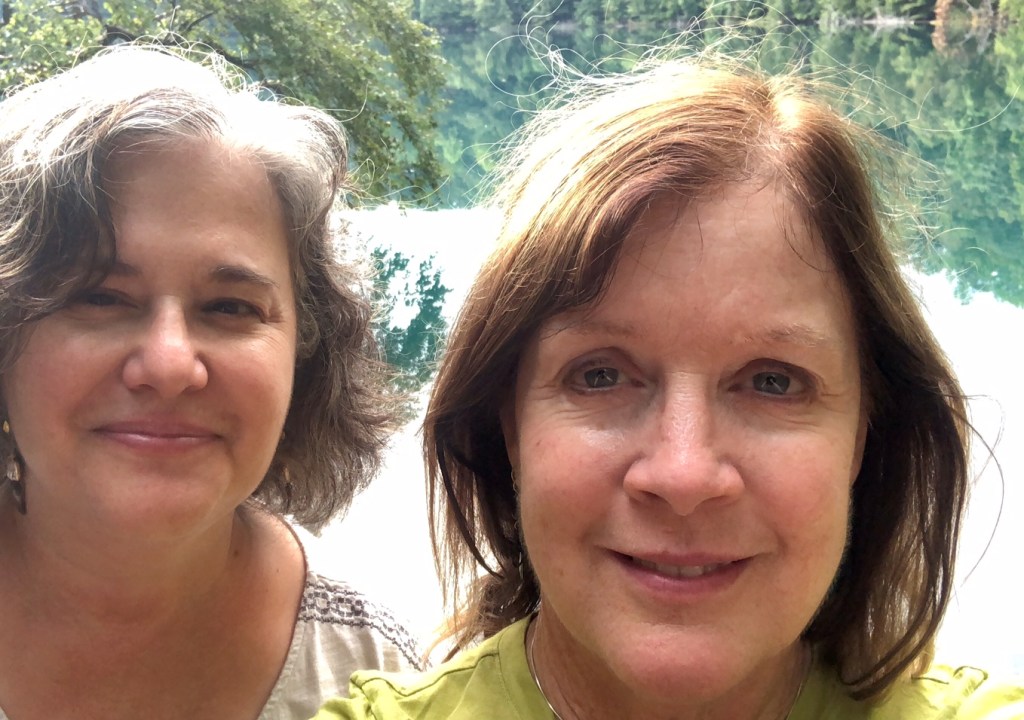
      A few times a year, I travel home to visit family and friends in Upstate, N.Y.  A long time ago, a tradition developed between one of my dearest friends and me. We walk the path around Green and Round Lakes near where we grew up. There’s something about walking a wooded path alongside pristine water that makes words flow, especially when your companion requires no explanation of your ramblings and doesn’t judge your craziest thoughts. By the time our trek reaches the more secluded Round Lake, we are compelled to pause and look in unison at the still water and the trees reflected on its surface. I know I can speak for both of us when I say this is a moment of reverence — broken only when one of us decides we need yet another “selfie.” 

      Surrounded by old-growth forest, Green and Round Lakes are two of only a few lakes in the world deemed “meromictic,” meaning there is no seasonal mixing of the upper and lower water levels as with other lakes. These glacially-carved lakes are deep and stable: Green Lake is 195 feet deep and Round Lake is 180 feet deep. The unusual features of these lakes create an otherworldly aquamarine color to the water. Growing up in this area, I took this beauty for granted. 

      I know that there were also times that I took my friendships for granted. Many years ago, I received a card that said: “The only way to have a friend is to be one.” It’s worth it to hold these words close and to live by them. Our old friends will be with us long after our parents have gone — they are a rare treasure, deserving careful attention. It seems fitting that Round Lake, a rare place, is the scene of my rendezvous with my old friend. 

      Share this:

      • Tweet
      Like Loading...
      Posted in poetry, Uncategorized, writing | 0 Comments | Tagged Friendship, GreenLakes, poetry, Walking, writing
    • Why Firefly

      Posted at 3:22 pm by Ellen Austin-Li, on January 2, 2019

      What manuscript? Those were my first thoughts when I read the subject line on the email. It was nearly midnight on a Sunday night this past July when I opened my email to find a publication acceptance for my first chapbook, “Firefly,” from Finishing Line Press. I was taken by surprise on so many levels—the first, not remembering submitting it at all. A quick search of “Submittable” yielded the answer: I had submitted this manuscript in April to the “New Women’s Voices” chapbook competition at Finishing Line Press. I had neither won the contest nor placed, but my poetry collection had been accepted for publication nonetheless. My mind flashed back on the moment when I hit “send” on this submission. A strange confluence of events had led me to compile this collection.

      The impetus for “Firefly” was a substitution for a different project. The year before, I had written a larger collection about the nearly concurrent deaths of my father and my nephew. These were poems I felt driven to write. I felt I owed them this debt, to create something in their memory. My intention was to see this collection in print, dedicated to them, but it just wasn’t gelling. I received advice from a poetry mentor to put aside this work for some time, to allow more distance from these tragic events, so I would be able to come back to the work with a clearer head.

      I also learned more about the world of poetry publication. After publishing individual poems, a poet typically publishes a chapbook or two before a larger collection. I wasn’t sure what my vision was for these poems about my father and my nephew, besides illuminating how different losses affect a family, though I had followed an inspiration to deepen the grouping with parallel poems grounded in nature. I understood the wisdom of devoting myself in the interim to a new project. I moved towards arranging a smaller, unrelated group of poems into a chapbook, mined from the hundreds of poems I had written over the previous six years.

      “Write what you know,” they say, and I had written plenty about what I know most intimately—alcoholism and drug addiction. I found poems I had written about drinking consequences when I was young, like a near-fatal car crash, but I also had some poems from my more recent struggles to live sober. I wrote several new poems to fill in the gaps. I liked the idea of painting this story in poetry, in more metaphorical terms—to me, this made the events, or at least the feelings they evoke, more universal. I want reading this collection to be like standing in front of an impressionistic painting in an art museum. Up close, you see individual brush strokes; step back, you see how the splotches of color come together to create a whole.

      Just six days before I opened the acceptance email, this same collection was evaluated in a poetry manuscript class I was attending. The anxiety I felt around having other flesh and blood humans read about my descent into alcoholism and addiction, even told in the “slant” way of poems, startled me. I felt naked, exposed to their potential negative judgements. There were only four other people in this class, and I knew most of them well. This was not a room full of strangers. So, why was I feeling this way? It was one thing to write the individuals poems, many of which these fellow poets had heard; it was another to string them together into a whole that painted a vivid (I thought) portrait of my underbelly. Sending this same chapbook electronically to disembodied individuals at a press, people whom I have never met in person and probably never would, felt like much less of a threat.

      Every criticism I heard in that class, constructive or otherwise, magnified in my mind. I considered abandoning the chapbook, as I could not pinpoint from where this negative energy sprung. I could not have foreseen how much worse I would feel after receiving the acceptance.

      I did not sleep after I opened that email. A part of me felt excited and relieved about the news—maybe my writing wasn’t as bad as I had told myself the whole week after my manuscript class. But, as the sleepless night crawled towards morning, I was steeped in fear. My skin itched and I shifted positions as my brain raced: maybe this collection is inferior work. People will read it and know that I am an imposter. Worse, I obsessed over the subject matter: What was I thinking? How could I expose myself like this? Everyone will know about me.

      It didn’t take me long to realize what was going on. Shame has this way of reappearing when I least expect it. Clean and sober over 14 years and I thought I had the shame-thing licked—it seems it had only been neutralized in the rooms of recovery. Being in the company of others who had also slid beneath layers of bad experiences due to alcoholism and addiction had magically lifted the paralysis of shame. I entered rooms full of men and women in recovery who were smiling and laughing. These were people who were joyful after having had some pretty awful stuff happen when they were using. If they could do it, so could I. That’s how recovery works, at least for me—bathed in the acceptance of others who would never judge me, who understood how I thought and felt, I could heal after years of believing myself incapable of living a different way.

      Over 20 years ago, before I got sober, my husband sent me to a psychiatrist who specializes in addiction medicine. Something he said stayed with me all these years: The hallmarks of alcoholism and addiction are shame and isolation. All these years later, I understand that shame and isolation are as much a part of me as my drinking once was. Living sober has helped me rise above these states of being towards which I naturally gravitate. Writing about my alcoholism/addiction helps me to NOT isolate with the effects of the disease. My hope is that, by sharing my story, I will reach at least one person who struggles with the same shame, one person who is tightly bound in their own cocoon.

      Share this:

      • Tweet
      Like Loading...
      Posted in Uncategorized | 0 Comments | Tagged alcoholism/addiction, poetry, publishing, recovery, shame
    • Author photo by Suz Fleming

    • Publication date May 21st, 2025. Click on image to order from Madville Publishing.
    • Books

      Publication date: August 6th, 2021. Click on image for Finishing Line Press's bookstore

    • Books

      artwork by Elaine Olund @ EEO Design

      Firefly is available for sale at Finishing Line Press or at Amazon.com

    • Blog Posts


  • Unknown's avatar

  • Tags

    Agnostics alcoholism/addiction book-review books cilmate change Covid19 creative-writing Friendship GreenLakes higher power Ireland literature Living with Fear loss MFA programs nature November election poem poetry prayer publishing racial justice reading recovery shame spiritual awakening spiritual experience spirituality Walking writing
  • Follow Ellen Austin-Li on WordPress.com
  • Follow Us

    • X
    • Instagram
    • Facebook
  • writing, publishing, poetry, alcoholism/addiction, recovery

    alcoholism/addiction poetry publishing recovery Uncategorized writing

Blog at WordPress.com.

  • Subscribe Subscribed
    • Ellen Austin-Li
    • Join 37 other subscribers
    • Already have a WordPress.com account? Log in now.
    • Ellen Austin-Li
    • Subscribe Subscribed
    • Sign up
    • Log in
    • Report this content
    • View site in Reader
    • Manage subscriptions
    • Collapse this bar
 

Loading Comments...
 

    %d