Ellen Austin-Li

poet and writer
Ellen Austin-Li
  • Home
  • Blog
  • Showcase
    • Poetry
    • Essays
    • Books
    • Select Journal Publications:
  • About
  • Events
  • Contact
  • Tag: recovery

    • Solstice: Where I Begin Again

      Posted at 4:14 pm by Ellen Austin-Li, on February 28, 2020
      Winter Solstice
       
      I.
      Dark
       
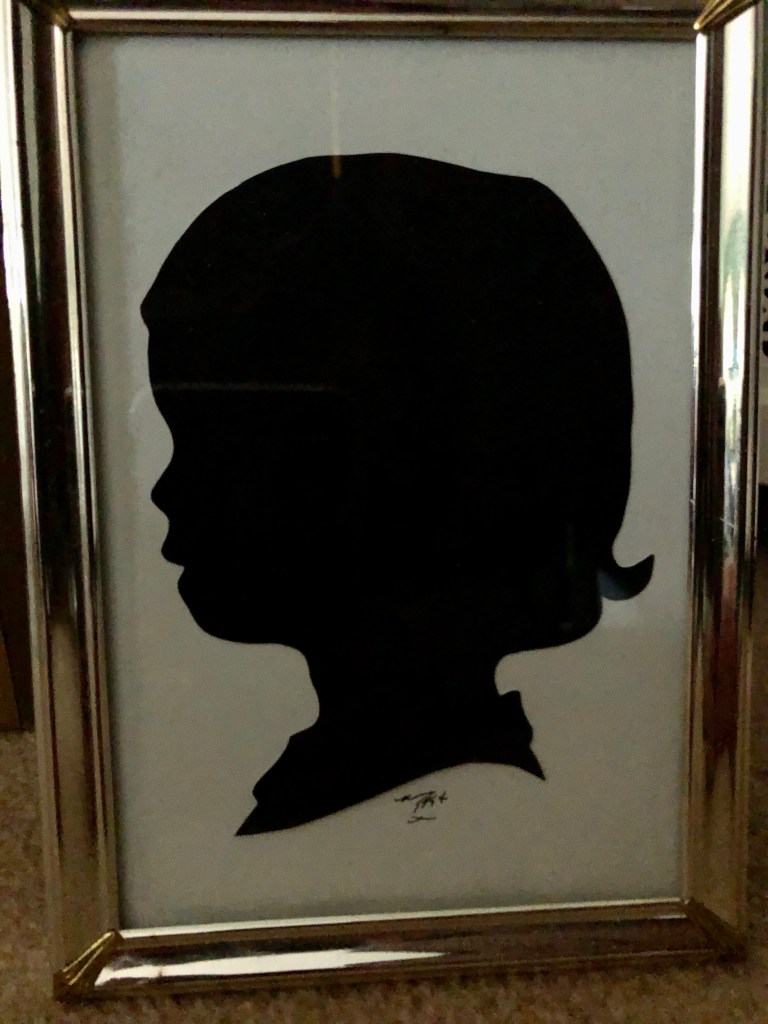
      One Christmas, my mother gifted me
      my childhood silhouette in a silver frame:
      a featureless profile in black, set against
      a white background. I recognized
      the weak chin and the errant curl flipped
      below my crown. What better self-portrait
      of youth than a faceless one, lips gapped
      as an accessory to take in more air?
      That little girl was all shadow, swallowed
      by the too-brightness around her.
      And she had no eyes — nothing to bring in
      the light right there in front of her
      as she turns away to face the coming
      of the longest night. She cannot see
      that this darkness means rebirth.
      On Winter Solstice the ancients say
      the sun is born. I wish I could cut
      an aperture in the dark form, save her
      from a lifetime of blindness.
       
      II.
      Light
       
      I open the mason jar, switch on
      the fairy lights — a string of fireflies
      animate as if it’s June and I’m capturing
      lightening bugs in the backyard.
      I screw on the metal lid and recall
      how the real ones flickered, then faded
      overnight. I lift this gift from a friend,
      unblinking, bold, brilliant: a beacon
      lit from the inside.
      And the stars start out on their cold slide through the dark.
      And the sun kicks inside the dark womb of the moon.
       
      * Italicized line from “Clear Night,” by Charles Wright

      Published in Anti-Heroin Chic, December, 2019


      Where I Begin Again

      Two months past the Winter Solstice, and I’m two months into my new life as a graduate student. Just a year ago, this plan was only a seed in my brain, but I followed the flow in a confluence of events and stumbled upon a graduate program in poetry that welcomed me into its fold: the Solstice Low-Residency MFA in Creative Writing Program at Pine Manor College. All the check marks fit into my neat little boxes—excellent faculty, exciting writers-in-residence, reasonable price, and on a woodsy campus near my beloved Boston, where so much of my history resides.

      I could not have predicted the hold poetry took on my soul. Part prayer, part meditation, poetry is a lifestyle, a life force, central to meaning-making at this developmental stage (yes, we are always in a developmental stage!) when understanding where I’ve been and how I got here occupies the mind. For me, using poetry as a tool, I step into the future. What will I leave behind? Studying the craft of poetry gives some intention to this question. I intend to gain clarity around this with each piece I write.

      There are advantages to returning to school at age 62, one of them being a pure motivation to match my written work with my intention. I’m not bogged-down by ego-driven ambition. One could say that being a relatively new writer at my age precludes any sort of notoriety. I’m in this to learn. I am in the enviable position of a woman who has already paid her dues in the workplace, has raised two sons, and finds herself with the time and the means to begin again. A friend of mine noted that most people are winding down at my age, but I’m in a different position. My progress was slowed by downed trees. I am nearly 16 years sober, but it’s been a hard-fought journey. I am most grateful to have emerged from these woods—late, but not too late, never too late—to rejoin the world.

      Disadvantages do exist in this scenario: I am often befuddled by what it is I am trying to say. I bring to every new experience a lifetime of memories and preconceived notions. Some may call this experience wisdom, but sometimes it’s difficult to wade through the committee in my head to distill the center in a poem. Psychologists call the ability to weed through information to find what’s important, “saliency determination;” I must have a deficiency there, now that I’m “awake.” Everything seems important to me. Writing poetry forces clarity—an exercise, or rather a practice, in awareness. In this way, composing poems fits into the framework of recovery: it is a significant part of my spiritual life.

      I approach this work with a sense of gratitude. I’m grateful to have found, with fellow writers, an engaged community. By pursuing a graduate degree, my main hopes are continued growth and to be able to contribute, after so many years of absence, in a meaningful way. A new year, a new decade, a new life. This sun kicks inside the dark womb of the moon.

      Share this:

      • Tweet
      Like Loading...
      Posted in writing | 6 Comments | Tagged MFA programs, poetry, recovery
    • Hymn for Agnostics

      Posted at 12:39 am by Ellen Austin-Li, on August 25, 2019
       Hymn

      We must have our own version of a higher power.
      I find mine in the silence of snowflakes
      hushing over a city,
      or a divine moment like entering into fragrant woods
      stippled by sunlight.
      I, too, crave rain,
      when the mist kisses my skin,
      until I feel bathed like a newborn baby.
      I’m a sinner willing
      to be baptized again by a new God,
      tears couched in raindrops.
      Other times, sun’s heat penetrates me,
      cicadas buzz like electric currents in the air,
      energy jolting, or better put, power resurging,
      singing a hymn that I am 
      not a low hum but, 
      oh, so much more luminous
      than I once believed.  

      -inspired by Jeanne Wagner’s “Fanlight” 

      This poem is for people like me, who no longer (or perhaps never did) have an unshakable belief in God. Specifically, the “Capital G” God of organized religion. I was raised Roman Catholic, but my faith was chipped away by religious dogma. I mean no offense to anyone who follows this, or any other, faith tradition. A part of me feels envious of those who live with such certainty. I know that this is the definition of faith, this belief in something unknowable, but I simply do not possess it. Lack of faith presents a problem for those of us who realize that following a spiritual path is our only hope for recovery from a self-centered disease like alcoholism and/or addiction. 

      I find my proof of a higher power, if not a specific God, in the beauty of the natural world. How can we not help but wonder at the mystery we sense when we wander outside? It’s late August, and the tiny green berries on the “Beauty Berry Bush” have begun to turn purple; the invisible hands of its internal clock move mysteriously towards Fall. I recently saw a hummingbird visit the bright red blooms of the lantanas in my flower pots, sipping nectar from dozens of clusters as it hovered, its wings beating so fast they were nearly indistinguishable. The cicadas rip like buzz-saws all day long and then hand the baton to the crickets when the sun sinks. At night, when the crickets chorus so loudly, most of us don’t think to wonder about it at all— but, there must be millions of crickets chirping to generate this cacophony. (And did you know that only the male crickets are able to chirp, all in an effort to woo females?)

      I don’t have to sit in a church pew to know there is spiritual energy in the universe. For me, these small miracles are enough to bring me peace. 

      In the throes of my disease, I felt both worthless and hopeless, but this is no longer the truth. Today, I am free to be present for these moments in the everyday. When I notice the patterns and the beauty in nature, I am aware of the space I occupy — I’m part of this world, no more, no less. This is my hymn — I hope it helps others to find their own.  

      Share this:

      • Tweet
      Like Loading...
      Posted in alcoholism/addiction, poetry, recovery, writing | 2 Comments | Tagged Agnostics, higher power, prayer, recovery
    • Why Firefly

      Posted at 3:22 pm by Ellen Austin-Li, on January 2, 2019

      What manuscript? Those were my first thoughts when I read the subject line on the email. It was nearly midnight on a Sunday night this past July when I opened my email to find a publication acceptance for my first chapbook, “Firefly,” from Finishing Line Press. I was taken by surprise on so many levels—the first, not remembering submitting it at all. A quick search of “Submittable” yielded the answer: I had submitted this manuscript in April to the “New Women’s Voices” chapbook competition at Finishing Line Press. I had neither won the contest nor placed, but my poetry collection had been accepted for publication nonetheless. My mind flashed back on the moment when I hit “send” on this submission. A strange confluence of events had led me to compile this collection.

      The impetus for “Firefly” was a substitution for a different project. The year before, I had written a larger collection about the nearly concurrent deaths of my father and my nephew. These were poems I felt driven to write. I felt I owed them this debt, to create something in their memory. My intention was to see this collection in print, dedicated to them, but it just wasn’t gelling. I received advice from a poetry mentor to put aside this work for some time, to allow more distance from these tragic events, so I would be able to come back to the work with a clearer head.

      I also learned more about the world of poetry publication. After publishing individual poems, a poet typically publishes a chapbook or two before a larger collection. I wasn’t sure what my vision was for these poems about my father and my nephew, besides illuminating how different losses affect a family, though I had followed an inspiration to deepen the grouping with parallel poems grounded in nature. I understood the wisdom of devoting myself in the interim to a new project. I moved towards arranging a smaller, unrelated group of poems into a chapbook, mined from the hundreds of poems I had written over the previous six years.

      “Write what you know,” they say, and I had written plenty about what I know most intimately—alcoholism and drug addiction. I found poems I had written about drinking consequences when I was young, like a near-fatal car crash, but I also had some poems from my more recent struggles to live sober. I wrote several new poems to fill in the gaps. I liked the idea of painting this story in poetry, in more metaphorical terms—to me, this made the events, or at least the feelings they evoke, more universal. I want reading this collection to be like standing in front of an impressionistic painting in an art museum. Up close, you see individual brush strokes; step back, you see how the splotches of color come together to create a whole.

      Just six days before I opened the acceptance email, this same collection was evaluated in a poetry manuscript class I was attending. The anxiety I felt around having other flesh and blood humans read about my descent into alcoholism and addiction, even told in the “slant” way of poems, startled me. I felt naked, exposed to their potential negative judgements. There were only four other people in this class, and I knew most of them well. This was not a room full of strangers. So, why was I feeling this way? It was one thing to write the individuals poems, many of which these fellow poets had heard; it was another to string them together into a whole that painted a vivid (I thought) portrait of my underbelly. Sending this same chapbook electronically to disembodied individuals at a press, people whom I have never met in person and probably never would, felt like much less of a threat.

      Every criticism I heard in that class, constructive or otherwise, magnified in my mind. I considered abandoning the chapbook, as I could not pinpoint from where this negative energy sprung. I could not have foreseen how much worse I would feel after receiving the acceptance.

      I did not sleep after I opened that email. A part of me felt excited and relieved about the news—maybe my writing wasn’t as bad as I had told myself the whole week after my manuscript class. But, as the sleepless night crawled towards morning, I was steeped in fear. My skin itched and I shifted positions as my brain raced: maybe this collection is inferior work. People will read it and know that I am an imposter. Worse, I obsessed over the subject matter: What was I thinking? How could I expose myself like this? Everyone will know about me.

      It didn’t take me long to realize what was going on. Shame has this way of reappearing when I least expect it. Clean and sober over 14 years and I thought I had the shame-thing licked—it seems it had only been neutralized in the rooms of recovery. Being in the company of others who had also slid beneath layers of bad experiences due to alcoholism and addiction had magically lifted the paralysis of shame. I entered rooms full of men and women in recovery who were smiling and laughing. These were people who were joyful after having had some pretty awful stuff happen when they were using. If they could do it, so could I. That’s how recovery works, at least for me—bathed in the acceptance of others who would never judge me, who understood how I thought and felt, I could heal after years of believing myself incapable of living a different way.

      Over 20 years ago, before I got sober, my husband sent me to a psychiatrist who specializes in addiction medicine. Something he said stayed with me all these years: The hallmarks of alcoholism and addiction are shame and isolation. All these years later, I understand that shame and isolation are as much a part of me as my drinking once was. Living sober has helped me rise above these states of being towards which I naturally gravitate. Writing about my alcoholism/addiction helps me to NOT isolate with the effects of the disease. My hope is that, by sharing my story, I will reach at least one person who struggles with the same shame, one person who is tightly bound in their own cocoon.

      Share this:

      • Tweet
      Like Loading...
      Posted in Uncategorized | 0 Comments | Tagged alcoholism/addiction, poetry, publishing, recovery, shame
    • Author photo by Suz Fleming

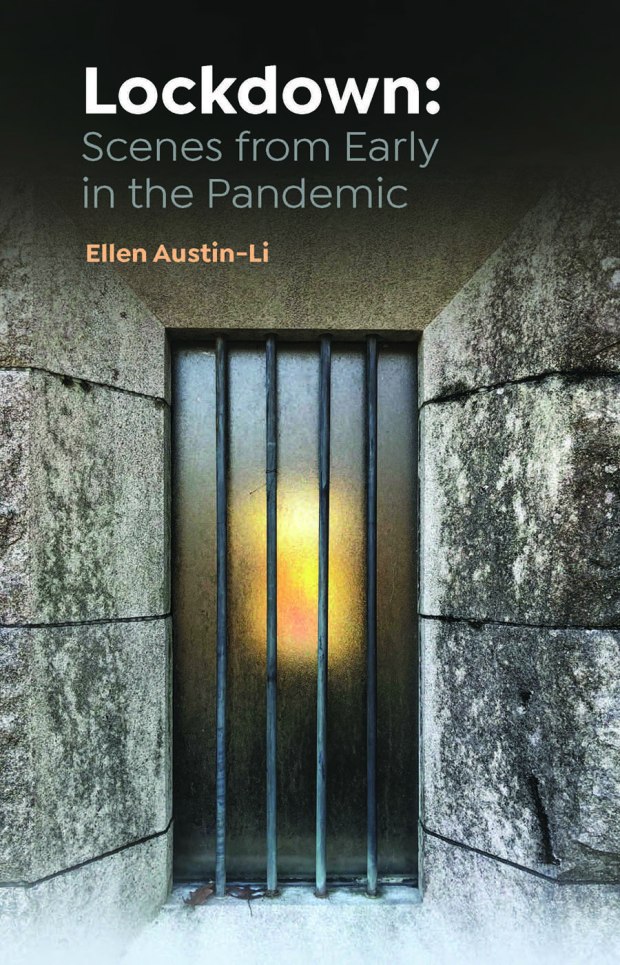
    • Publication date May 21st, 2025. Click on image to order from Madville Publishing.
    • Books

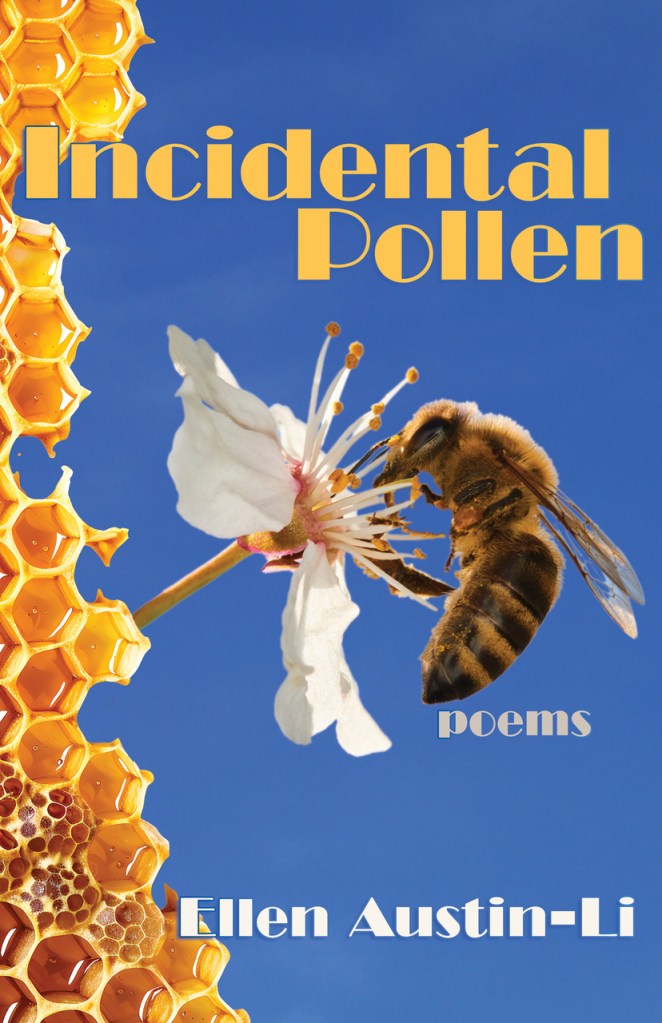
      Publication date: August 6th, 2021. Click on image for Finishing Line Press's bookstore

    • Books

      artwork by Elaine Olund @ EEO Design

      Firefly is available for sale at Finishing Line Press or at Amazon.com

    • Blog Posts


  • Unknown's avatar

  • Tags

    Agnostics alcoholism/addiction book-review books cilmate change Covid19 creative-writing Friendship GreenLakes higher power Ireland literature Living with Fear loss MFA programs nature November election poem poetry prayer publishing racial justice reading recovery shame spiritual awakening spiritual experience spirituality Walking writing
  • Follow Ellen Austin-Li on WordPress.com
  • Follow Us

    • X
    • Instagram
    • Facebook
  • writing, publishing, poetry, alcoholism/addiction, recovery

    alcoholism/addiction poetry publishing recovery Uncategorized writing

Blog at WordPress.com.

  • Subscribe Subscribed
    • Ellen Austin-Li
    • Join 37 other subscribers
    • Already have a WordPress.com account? Log in now.
    • Ellen Austin-Li
    • Subscribe Subscribed
    • Sign up
    • Log in
    • Report this content
    • View site in Reader
    • Manage subscriptions
    • Collapse this bar
 

Loading Comments...
 

    %d